Olenoides
Middle Cambrian
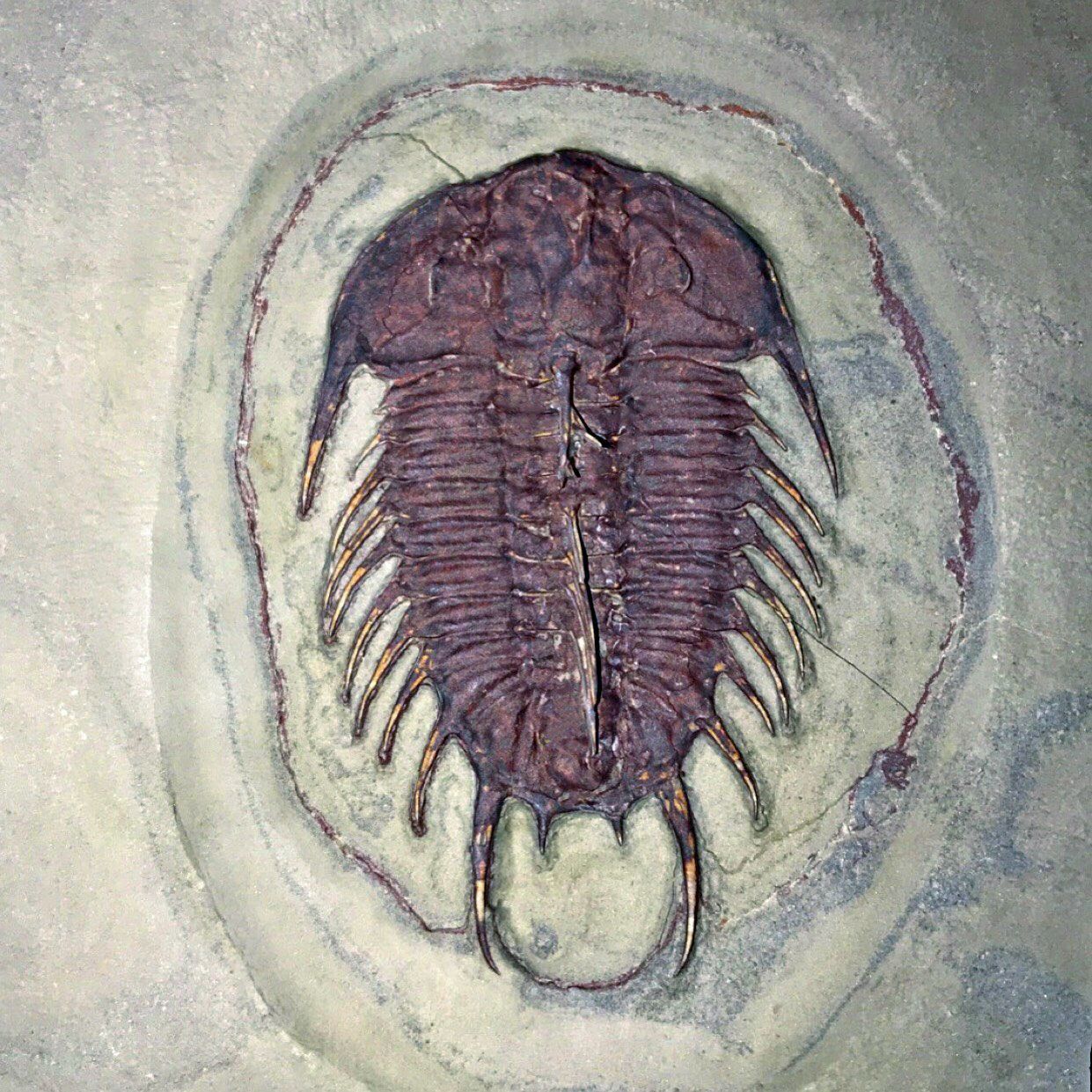
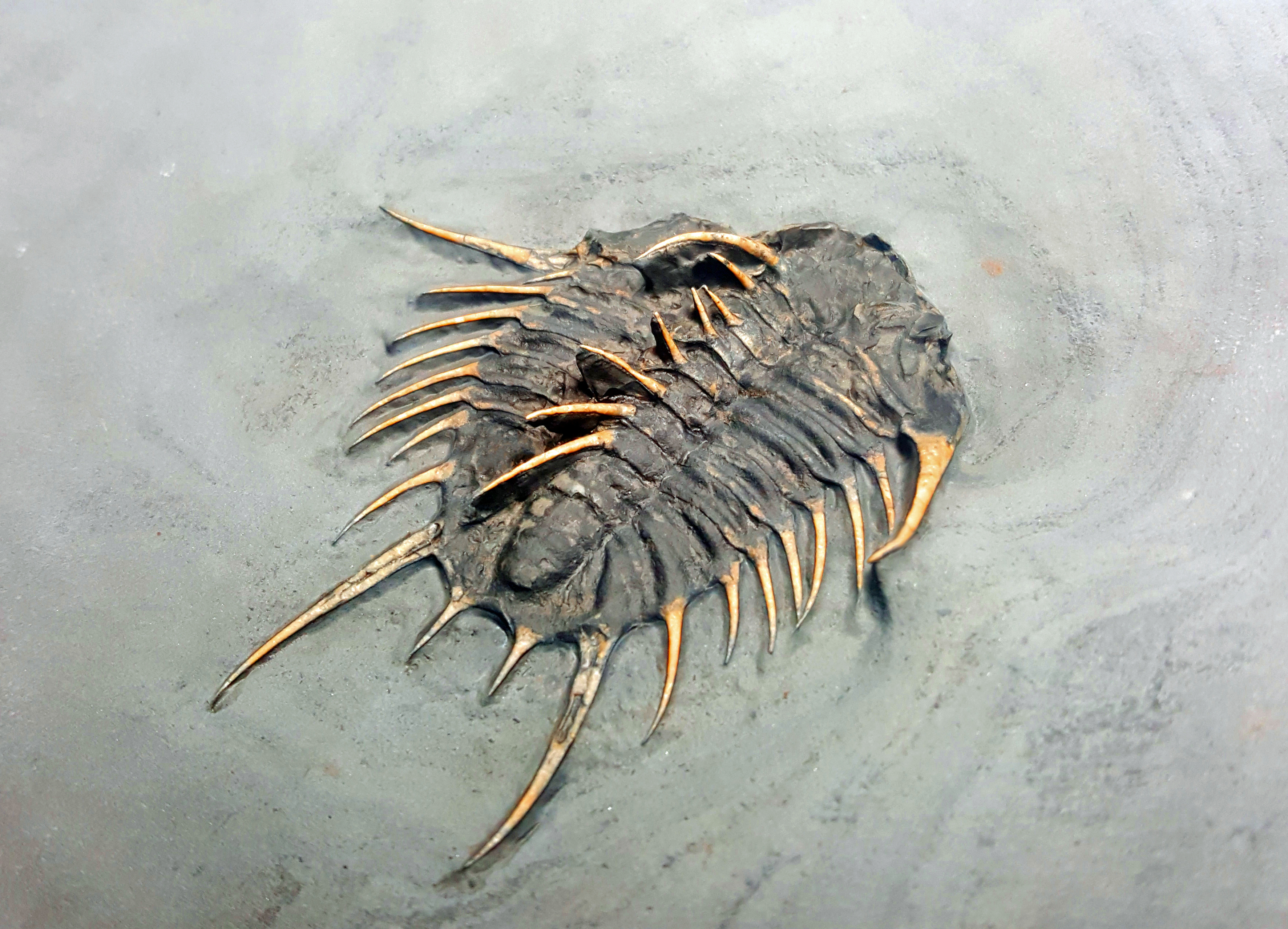
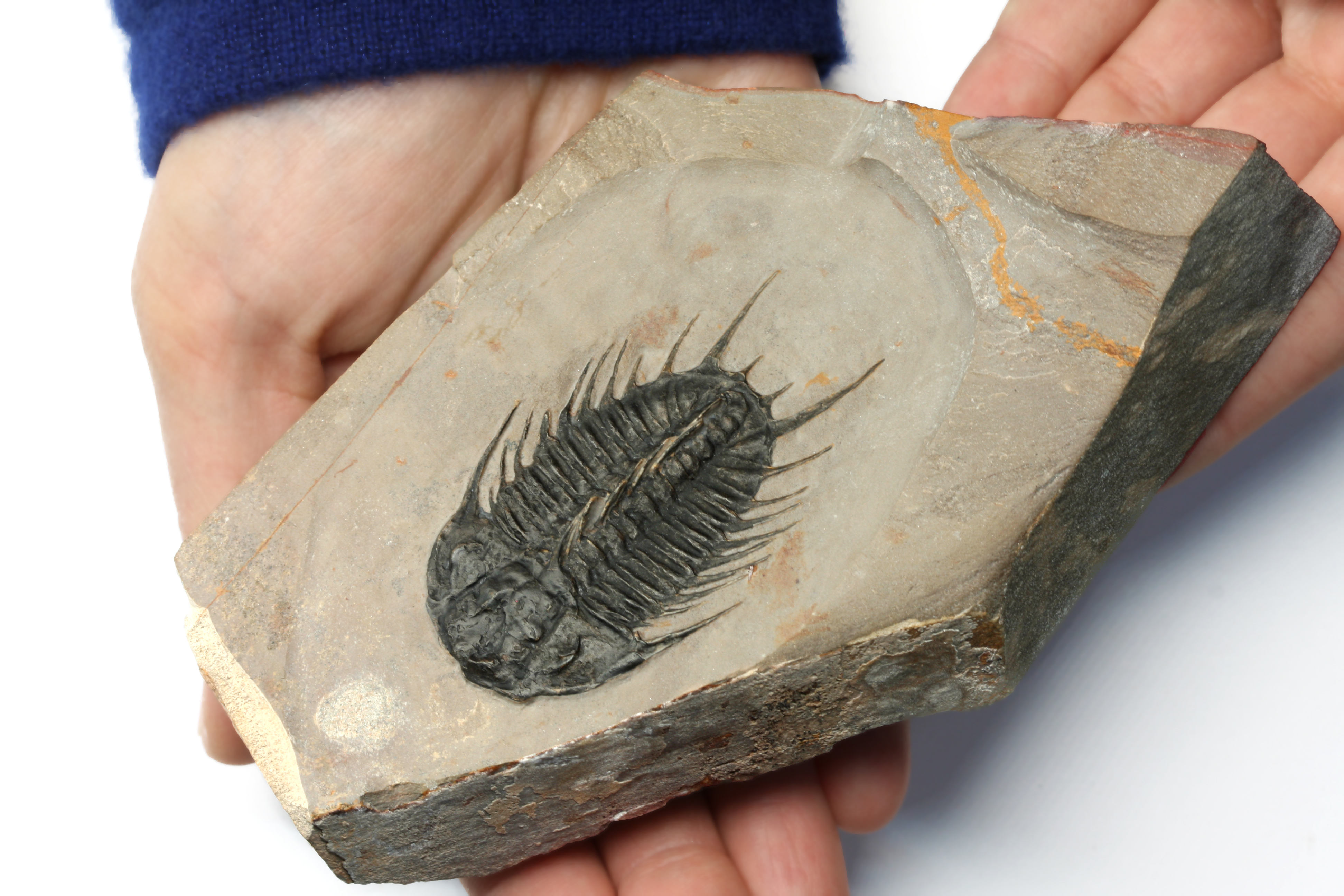
Olenoides is everyone’s favorite spiny trilobite from the Middle Cambrian of Utah — and for good reason. These striking black-exoskeleton specimens are highly desirable, especially when they preserve a full rack of standing axial spines running the length of the thorax and pygidium. When complete and well-prepared, they rank among the most visually impressive trilobites.
Finding them, however, is rarely easy. Most Utah Olenoides occur in very hard rock — blocky limestones, dense micrites, and coarse-grained siltstones that demand long days of heavy splitting with sledgehammers and wedges. The same toughness carries over into preparation: freeing a clean, fully articulated specimen without damaging the delicate axial spines or pleural tips is slow, exacting work that few preparators enjoy.
While several species occur across Utah’s Middle Cambrian formations, this page focuses on the classic material from the Wheeler and Marjum Formations of the House Range — the horizons that have produced the majority of the finest complete examples.
Summary
Olenoides is a genus of corynexochid trilobites (order Corynexochida, family Dorypygidae) that was widespread in the Middle Cambrian. In Utah it is best known from the classic soft-bodied and shelly faunas of the House Range and nearby ranges, where several species occur in exceptional preservation.
Classification
| Class | Trilobita |
| Order | Corynexochida |
| Suborder | Corynexochina |
| Family | Dorypygidae |
| Genus | Olenoides |
Habitat And Environment
In Utah, Olenoides inhabited open-shelf to slightly deeper marine environments along the western margin of Laurentia during the Middle Cambrian. Fossils are found primarily in the Wheeler Formation, Marjum Formation, Weeks Formation, and Spence Shale, as well as equivalent units in the Drum Mountains and House Range. These settings ranged from low-energy, fine-grained mud bottoms (ideal for soft-tissue preservation) to slightly more energetic carbonate-rich environments. The genus preferred soft substrates in relatively quiet water below fair-weather wave base.
Ecological Role And Lifestyle
Olenoides was a benthic predator or scavenger. It possessed a robust exoskeleton with a large, parallel-sided glabella, well-developed eyes, and a spinose pygidium. Soft-part preservation (especially from the Wheeler and Marjum) shows walking legs and antennae, confirming an active epifaunal lifestyle. Some specimens display healed injuries consistent with attacks by larger predators such as anomalocaridids. The animal could partially enroll for defense.
Utah Species and Occurrences
Several species are recorded from Utah, including:
• Olenoides nevadensis (type species) – Wheeler and Marjum Formations
• Olenoides superbus – Marjum Formation (notably large individuals)
• Olenoides vali – upper Wheeler Formation
• Olenoides trispinus – Marjum Formation
Additional species and indeterminate material from the Spence Shale and other Middle Cambrian units.
Complete, articulated specimens are relatively uncommon in the better-known Lagerstätten compared with many other trilobites, and soft-tissue details are occasionally preserved.
Scientific Significance
Utah material of Olenoides has been important for understanding Middle Cambrian trilobite morphology, taphonomy, and paleoecology. The combination of abundant articulated exoskeletons and rare soft-part preservation makes the Utah occurrences among the most informative for the genus outside the Burgess Shale.