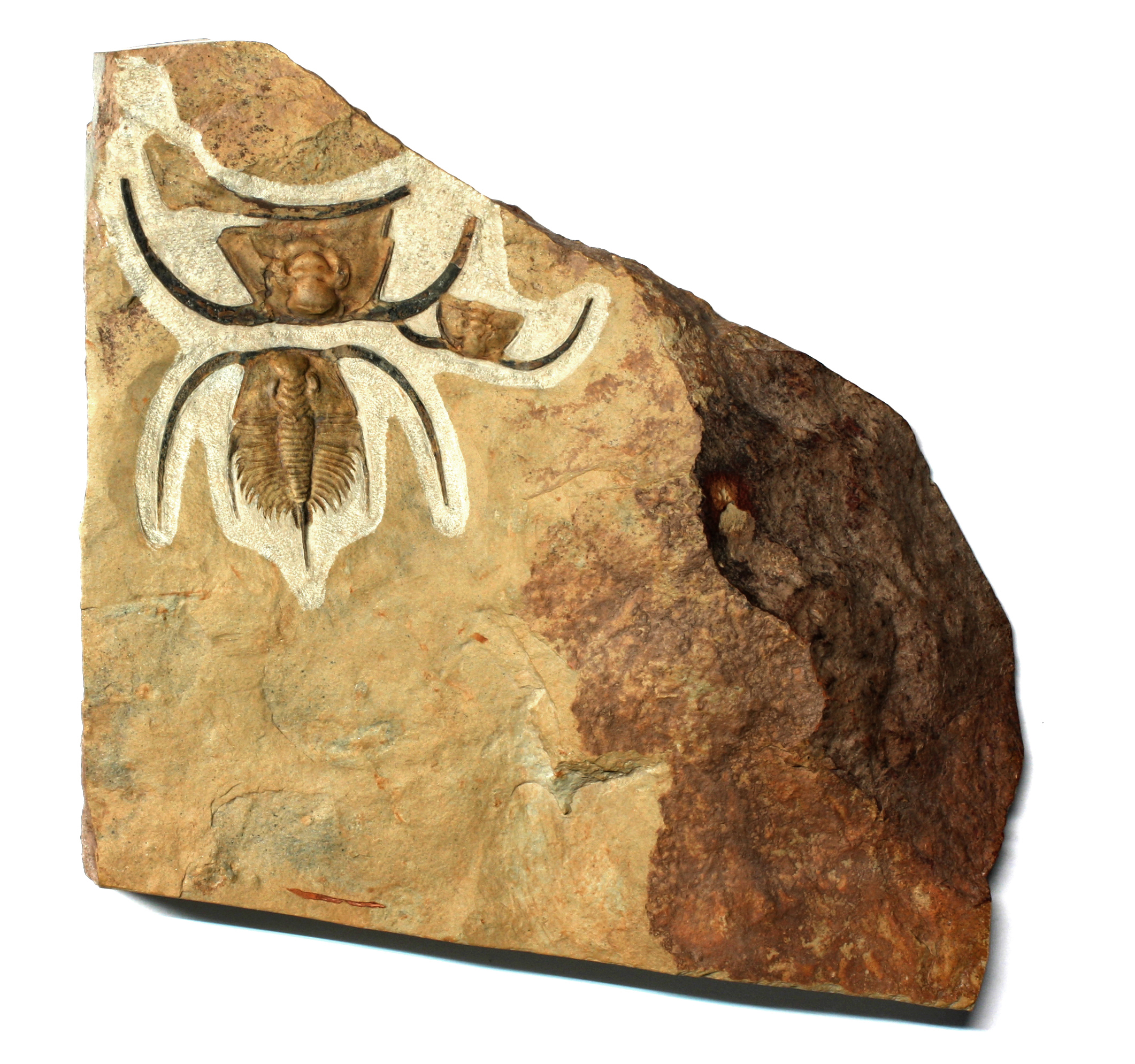
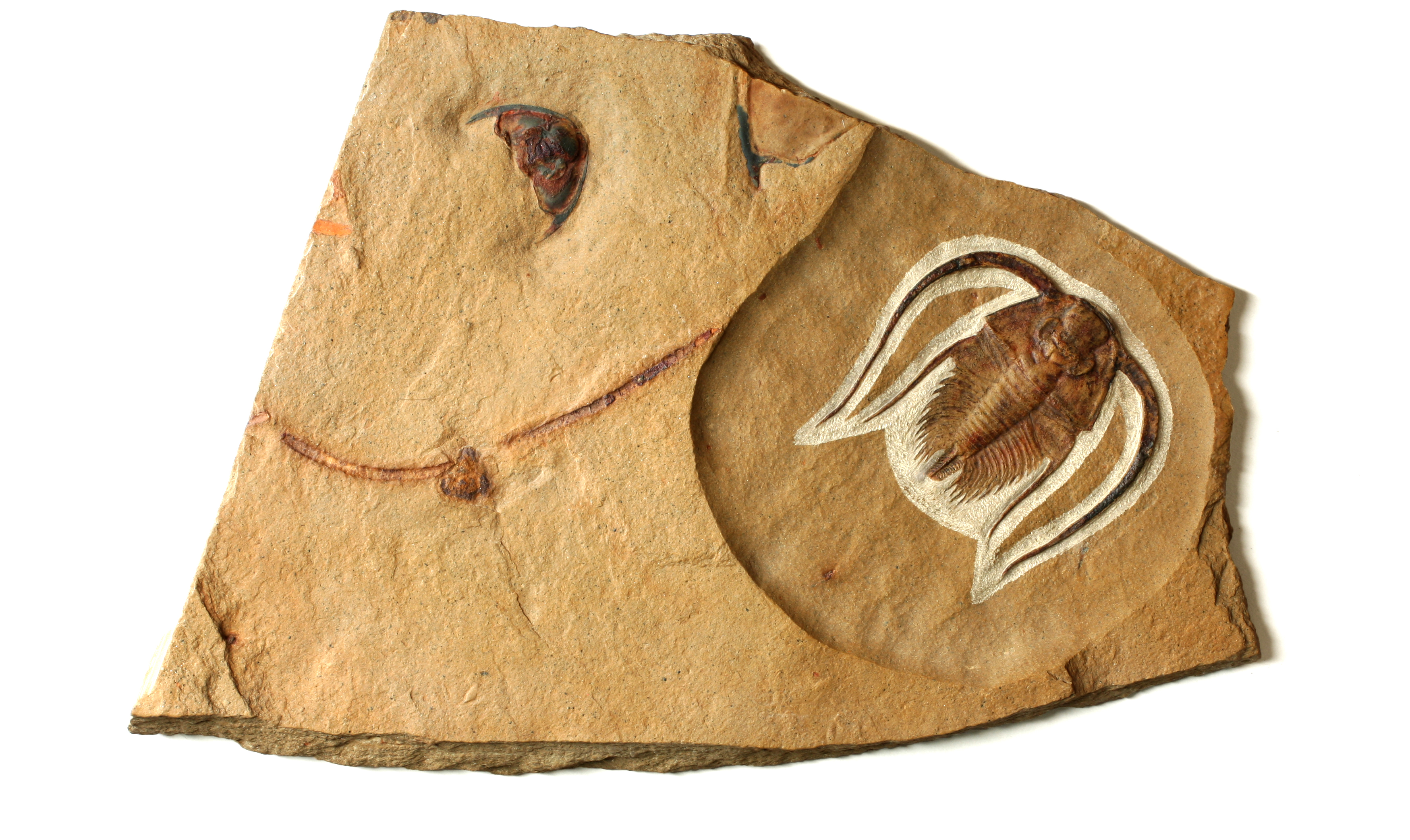
Bristolia insolens
Lower Cambrian
Bristolia insolens-one of those fossilized Holy Grails. Behold the bizarre ram’s horns emanating from the front of the cephalon. This species is legendary. Both in appearance and hyper rarity. Complete examples are insanely rare. Epic examples exist somewhere in the ether (or here on this site as luck would have it). In all seriousness, this species is on most collectors bucket list. Occasional specimens have appeared from California in the past few decades, with heartier Nevada examples being less common. B. insolens is harder to find complete than its near-impossible-to-find-complete cousin, Bristolia bristolensis. Read the description on bristolensis and factor that by 10 for insolens. This species pretty much boils down to blind luck and thousands of hours splitting rock from a zone that occurs in an already narrow zone, that is more or less not accessible these days based on location, regulations, etc.
Species Overview
Bristolia insolens lived approximately 515-520 million years ago in the Lower Cambrian in what is now the Great Basin region. At that time, Earth’s continents were still assembling into larger landmasses, shallow seas covered much of what is now western North America, and complex multicellular life was exploding in the oceans. There were no land plants, no forests, and the atmosphere was still transitioning toward the oxygen-rich world we know today. Bristolia trilobites were using those wide, stiff spines for stability with incoming currents.
Geological Context
Bristolia insolens is from the Lower Cambrian (Series 2, Stage 4), occurring within a relatively narrow stratigraphic interval of the Olenellus Zone. It defines the Bristolia insolens subzone, a biostratigraphically useful interval that marks a period of maximum flooding within shallow marine platform environments of the Great Basin. The species is preserved in fine-grained siliciclastic deposits, primarily dark shales and siltstones that accumulated in low-energy, subtidal to intertidal settings. These sediments reflect quiet-water conditions on a broad, storm-influenced carbonate-siliciclastic ramp during a transgressive phase of Early Cambrian sea-level rise.
Classification
| Class | Trilobita |
| Order | Redlichiida |
| Suborder | Olenellina |
| Family | Biceratopsidae |
| Genus | Bristolia |
| Species | B. insolens |
Fossils and Preservation
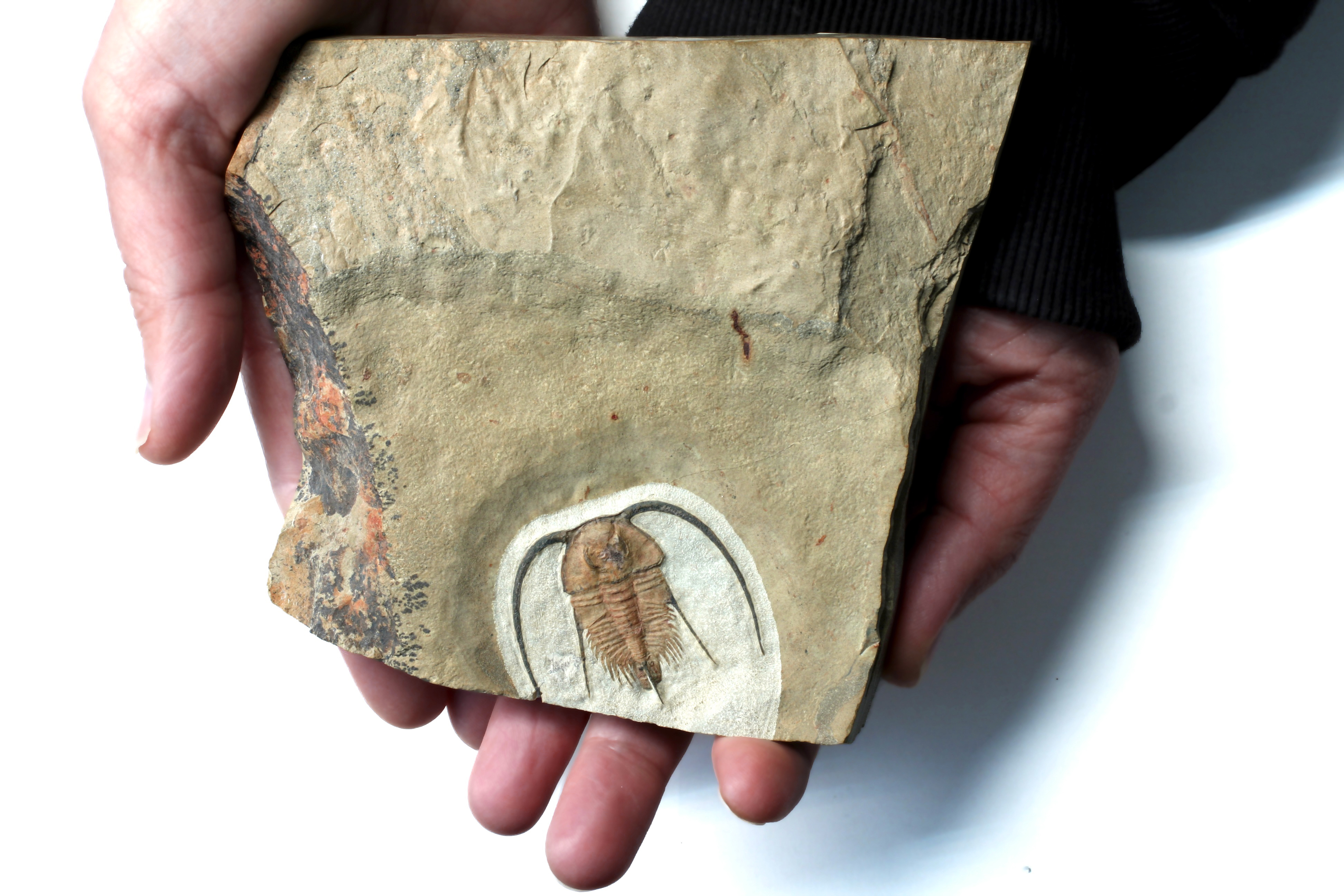
Specimens of B. insolens are typically small, with adults generally measuring less than 2 cm. The species is readily identified by its rectangular cephalon and prominent, anteriorly directed genal spines that exhibit strong outward curvature, giving them a distinctive ram-horn appearance. These horns likely served as hydrodynamic steering devices. A short thorax is followed by an extended opistothorax and a short telson. Fragmentary remains are relatively uncommon, and complete or articulated specimens are exceptionally rare. Most known material consists of isolated cephala or segments, often preserved as compressed molds or low-relief impressions in fine shale.
Ecology and Paleoecology
Bristolia insolens inhabited shallow subtidal to intertidal marine environments during the Early Cambrian radiation of arthropods. Multiple morphotypes are observed within the species, primarily distinguished by variation in genal spine curvature and length, as well as differences in overall cephalon shape. These morphotypes may reflect ecophenotypic responses to local environmental conditions, ontogenetic (growth-related) variation, or sexual dimorphism. The species occurs alongside other olenellid trilobites that inhabit the Bristolia zonule. As a benthic organism, it likely lived on or near the seafloor, likely as an opportunistic predator, detritivore or low-level suspension feeder.
Scientific Significance
As one of the most morphologically distinctive olenellids, Bristolia insolens provides key insights into the evolutionary experimentation and diversification of trilobites during the Cambrian Explosion. Its restricted stratigraphic range and recognizable morphology make it valuable for biostratigraphy, while the presence of multiple morphotypes offers opportunities to study intraspecific variation and paleoecological adaptation in early Paleozoic arthropods. The rarity of well-preserved material, even of isolated parts, underscores the exceptional nature of the deposits in which it occurs and continues to contribute to our understanding of Early Cambrian paleobiology and faunal provincialism in Laurentia.