Mesonacis fremonti
Lower Cambrian
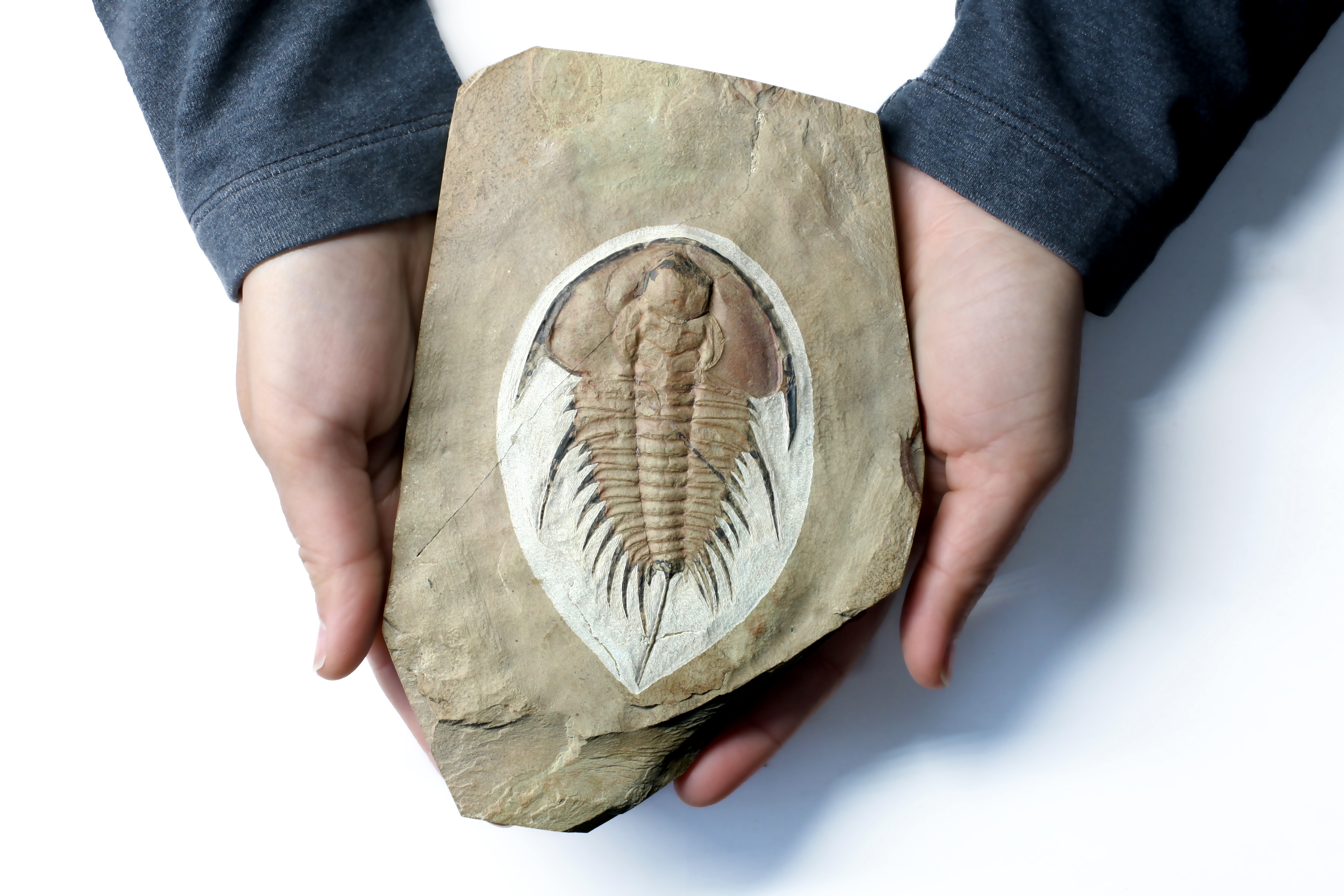
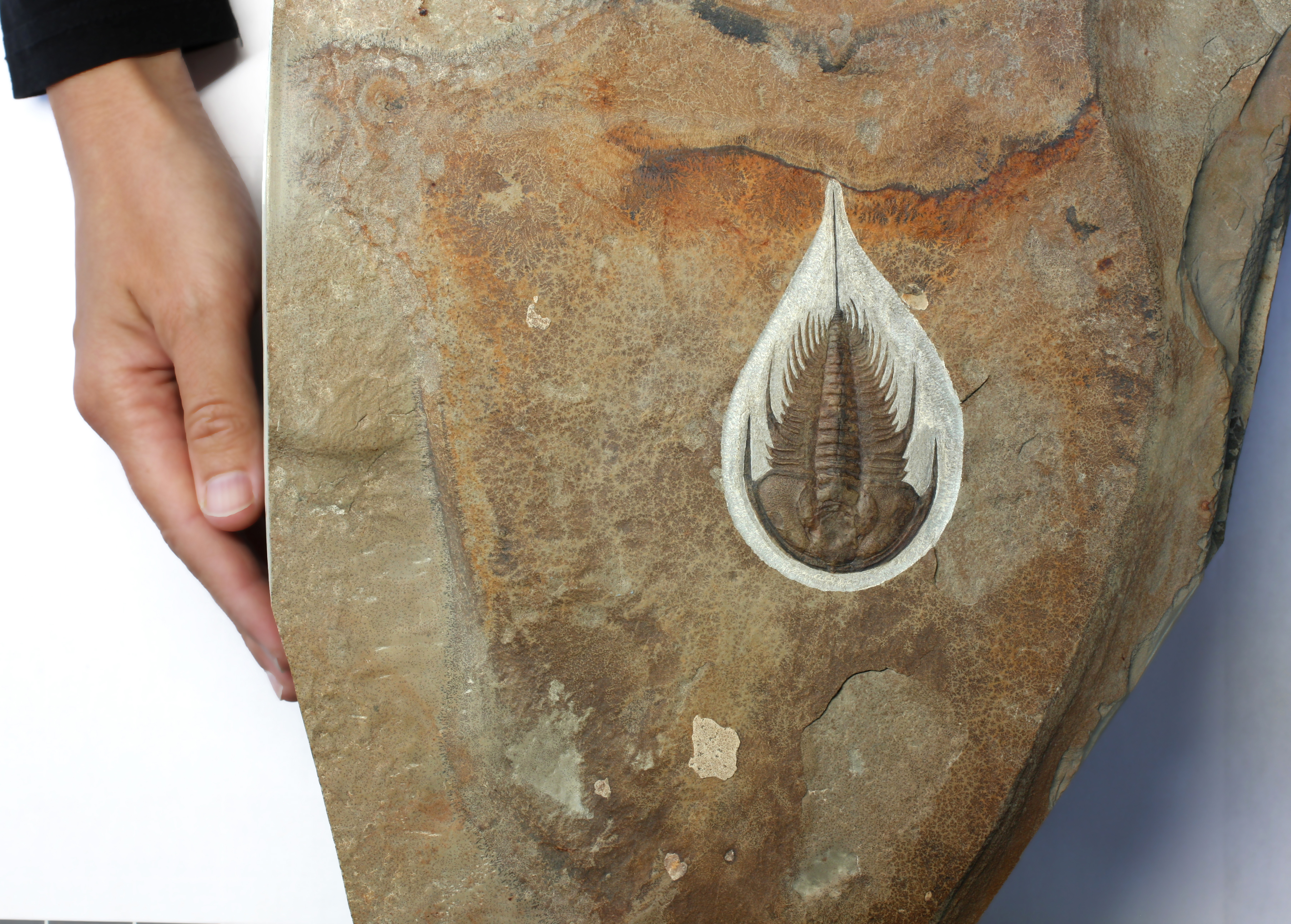
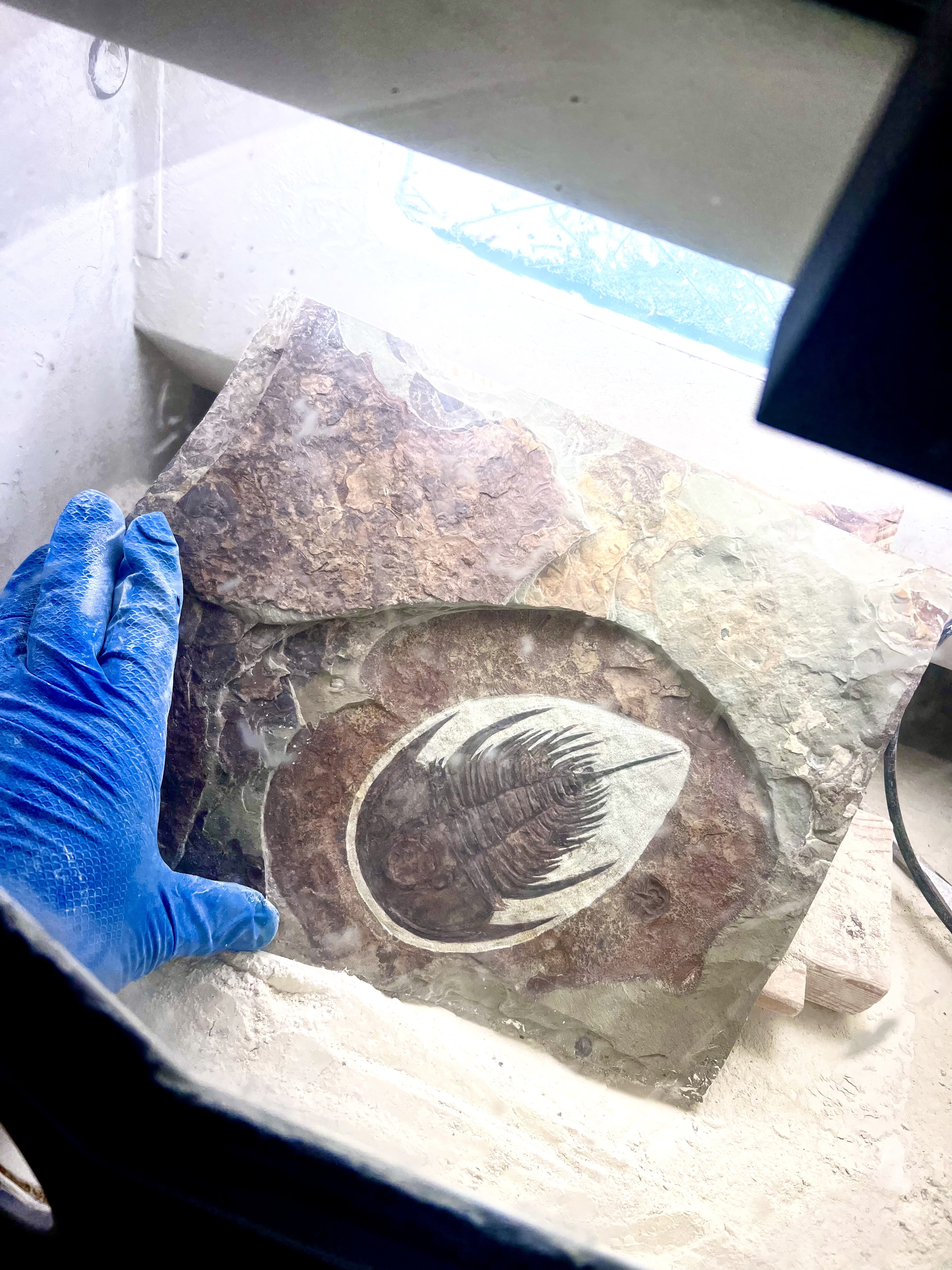
The beast of the Lower Cambrian. Break out the 20lb sledges, 7lb wedges and that 20lb pry bar, we’re going on a lion hunt! Mesonacis fremonti -or- Olenellus fremonti. The argument over which genus takes precedence still echoes about. Mesonacis sounds more rare so it usually wins out. Academia also agrees. Finding huge, complete examples of this Lower Cambrian giant are akin to finding a an adult male lion in a savannah full of wildebeests. M. fremonti grew to very large sizes-probably maxing out around a foot, although I’ve never seen one. And finding them often felt more like being on a demolition crew than collecting fossils. Big trilobites mean moving big rocks and shoveling dirt and gravel by the tonnage to expose those rocks. Several decades ago the west was indeed wild. Due to the size of these trilobites, most individuals were found disarticulated-head drifted off, missing segments, no tail spine, etc. But every once in a while, after that 4 day long struggle to move that several thousand pound rock platform, a complete specimen appeared. As to whether that complete specimen was any good is another story all together. Premium examples of these are extremely rare. A quick google search turns up very little. Tangling with these large fossilized beasts in the prep lab was equally as difficult where one might spend 50+ hours working to expose the delicate exoskeleton. Truly epic examples of this species is another bucket list must-have for collectors, corporate board rooms and fine art galleries.
Geological Context
Mesonacis fremonti is a large olenellid trilobite from the Lower Cambrian (Series 2, Stage 4). It occurs within the Olenellus Zone and is frequently found in association with Bristolia faunas in shallow marine strata of the Great Basin. The species is typically preserved in fine-grained siliciclastic sediments, particularly dark shales and siltstones deposited in low-energy, subtidal to intertidal settings on a broad carbonate-siliciclastic shelf. These quiet-water deposits formed during transgressive phases of Early Cambrian sea-level rise and often preserve characteristic shallow-marine benthic communities.

Classification
| Class | Trilobita |
| Order | Redlichiida |
| Suborder | Olenellina |
| Family | Olenellidae |
| Genus | Mesonacis |
| Species | M. fremonti |
Fossils and Preservation
Specimens of M. fremonti are among the larger olenellids of the interval, with robust cephala and a multi-segmented thorax. The species displays the classic olenellid morphology, including a broad cephalon, prominent genal spines, and a relatively small pygidium. Complete articulated specimens are rare; most material consists of isolated cephala or partial thoraces preserved as compressed molds or low-relief impressions in fine shale. High-fidelity surface detail is limited to particularly favorable depositional horizons. There is a great diversity of morphotypes within the species. Thorax width, cephalon to thorax ratios, spine lengths-all differ within narrow layer packages. It is a species that likely needs sorting out.
Ecology and Paleoecology
Mesonacis fremonti inhabited shallow subtidal to intertidal marine environments during the peak of the Cambrian radiation. It frequently co-occurs with other olenellid trilobites, including species of Bristolia, Olenellus, and related forms, in relatively low-diversity benthic assemblages. As a benthic arthropod, it likely lived on or near the seafloor and was probably a detritivore or opportunistic feeder. Subtle morphological variation observed in the species may reflect responses to local environmental gradients or different growth stages.
Scientific Significance
Mesonacis fremonti is an important component of Early Cambrian olenellid diversification and helps illuminate patterns of size increase and morphological evolution within the group. Its occurrence alongside other olenellids provides valuable data for biostratigraphic correlation across the Great Basin. The species contributes to our broader understanding of Early Cambrian paleobiology, particularly the ecological structure of shallow marine communities during one of life’s most dramatic evolutionary radiations. The relative rarity of well-preserved material underscores the special taphonomic conditions required for the preservation of these early arthropods.