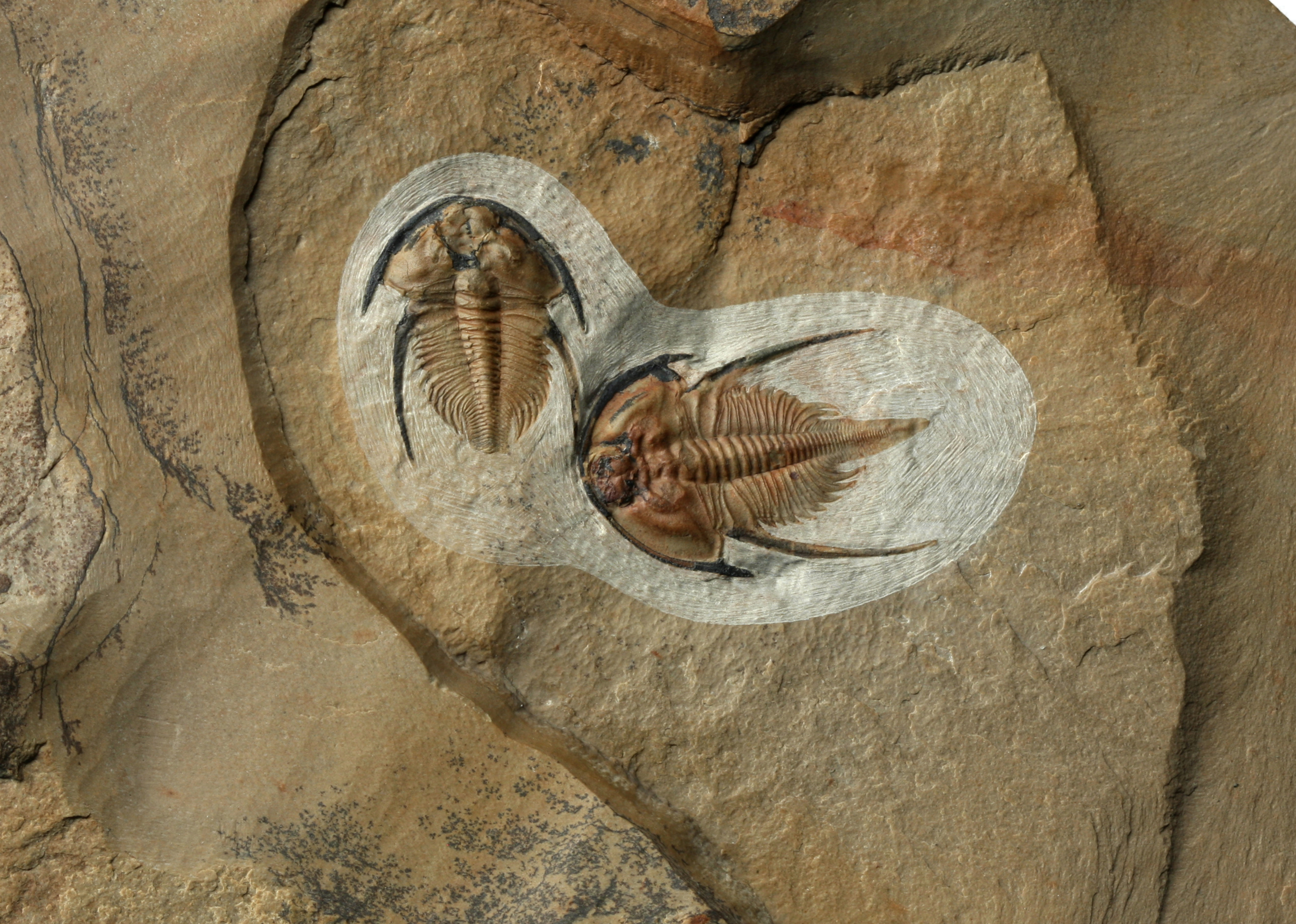
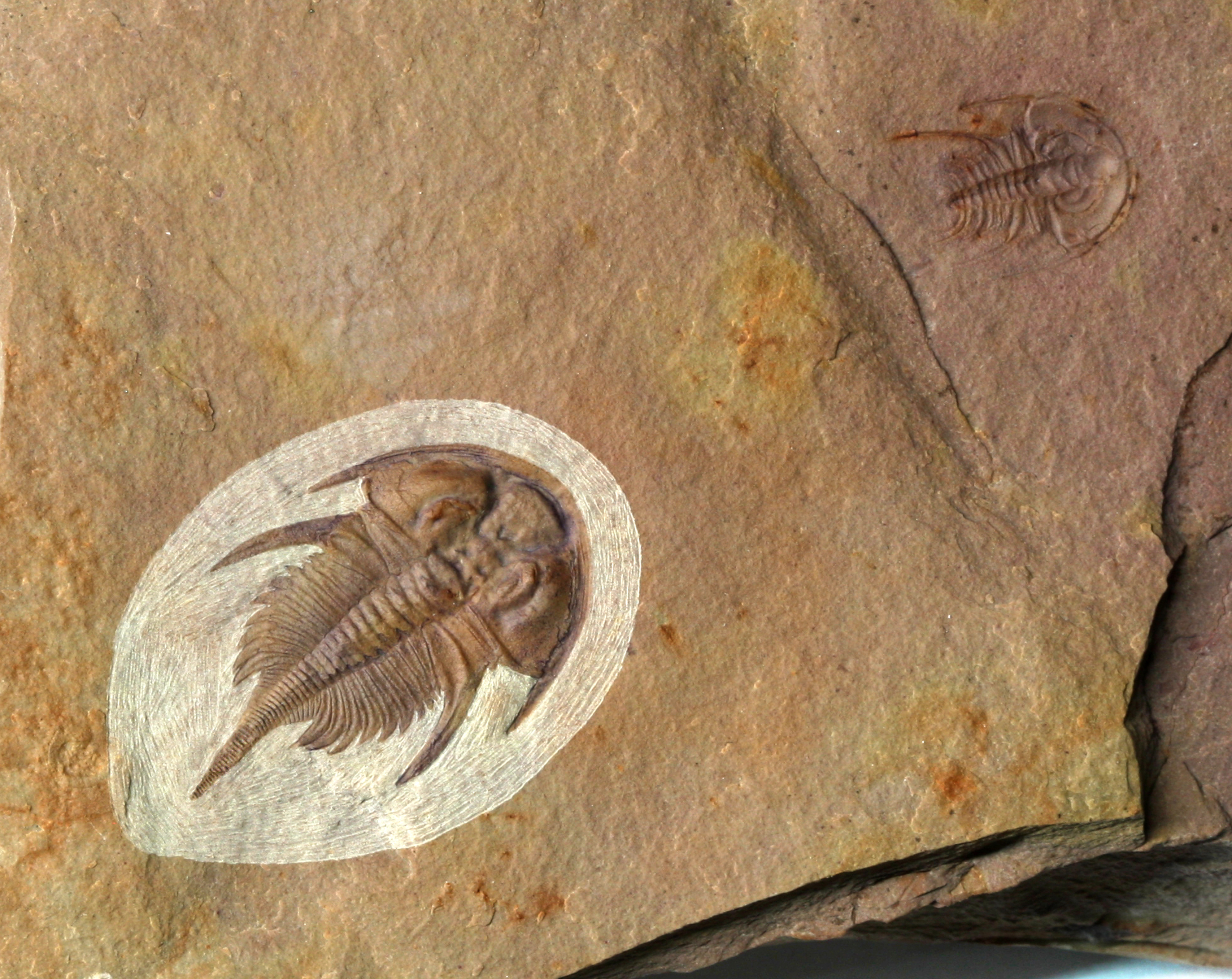
Nephrolenellus geniculatus
Lower Cambrian
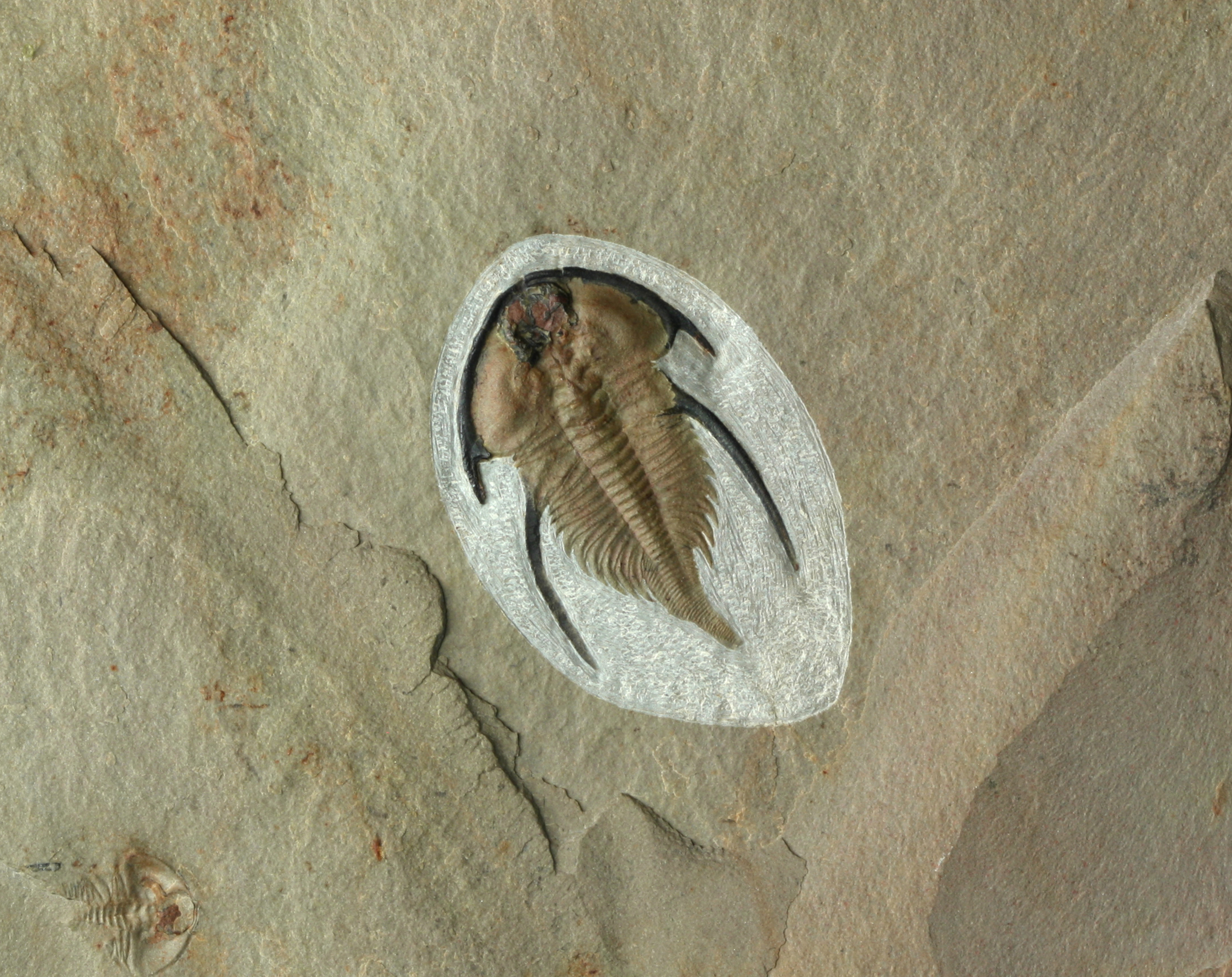
Nephrolenellus geniculatus is an unusual Biceratopsid that occurs with more standard olenellid trilobites in the final deposits of the Lower Cambrian as extinction pressure was ramping up on these trilobites. This diminutive species is typically 1 cm or less, with unusually large specimens measuring 2.5 cm, and very large and extremely rare examples reaching 4 cm.
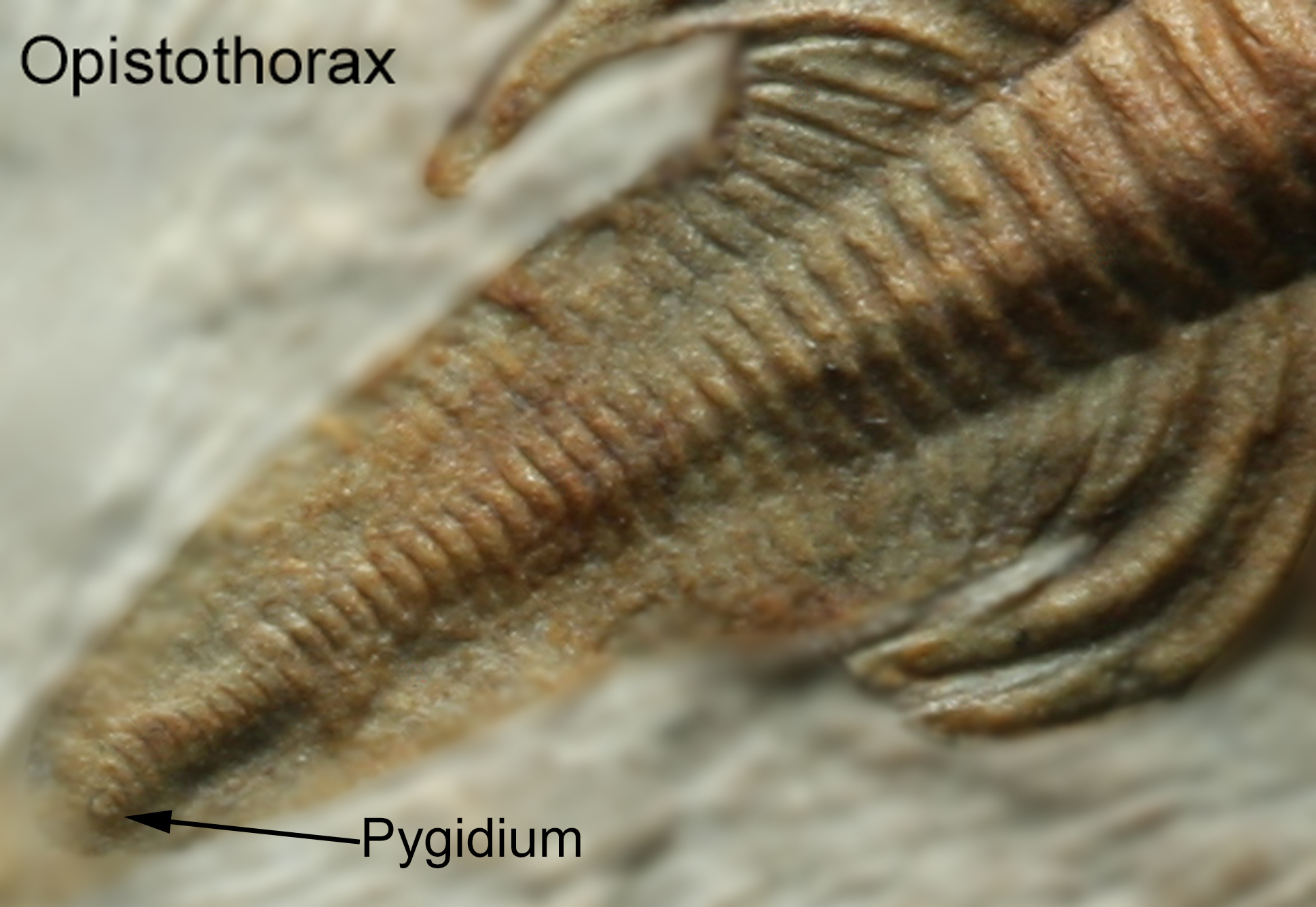
N. geniculatus is known for its unusual thorax which transitions into a very long opistothorax (opistothorax). Some specimens exhibit an incredible 40+ segments in the opistothrax.
It remains unclear what the function or purpose of the opistothorax was but Nephrolenellus is probably the best example to display this unusual anatomy. Many olenellid trilobites feature an opisthothorax. This section likely improved the animal’s maneuverability and stability on soft seafloor sediments, allowing greater bending and weight distribution while the thorax handled the primary locomotory and protective roles. The terminal spine may also have served defensive or sensory functions.
Species Overview
Nephrolenellus geniculatus belongs to the genus Nephrolenellus in the family Biceratopsidae (order Redlichiida, suborder Olenellina), representing one of the final classic trilobite lineages of the late Early Cambrian. It lived during the latest Dyeran stage (uppermost Olenellus Zone), approximately 515–510 million years ago, making it a key marker of the terminal phases of the Cambrian explosion’s great diversification of marine arthropods and the approaching olenellid extinction.
Classification
| Class | Trilobita |
| Order | Redlichiida |
| Suborder | Olenellina |
| Family | Biceratopsidae |
| Genus | Nephrolenellus |
| Species | N. geniculatus |
Habitat And Environment
Nephrolenellus geniculatus inhabited shallow, nearshore marine environments along the western margin of the paleocontinent Laurentia (present-day western United States), particularly in what is now eastern California and Nevada. Fossils are primarily preserved in siltstone and shale layers of the Carrara Formation and equivalent units of the Pioche Formation, which represent low-energy, subtidal to intertidal depositional settings with fine-grained sediments indicative of quiet, protected coastal waters. These habitats formed part of a broader epicontinental sea system, with soft, muddy substrates that supported late Dyeran benthic communities during the final stages of the Olenellus Zone.
Ecological Role And Lifestyle
As a typical olenelline trilobite, Nephrolenellus geniculatus was a benthic epifaunal organism, living on the surface of the seafloor rather than burrowing deeply into the sediment. It is inferred to have been a mobile, low-level deposit feeder, actively crawling across the substrate to consume organic detritus, microbial films, and fine particulate matter — essentially acting as a seafloor scavenger or detritivore that contributed to nutrient recycling in the ecosystem. Its morphology supports this: a relatively small cephalon with distinctive genal features and a multi-segmented thorax suited for navigating soft bottoms. Like other trilobites, it underwent periodic molting (ecdysis), and fossil evidence often shows injuries or abnormalities, possibly from failed molts, predation, or environmental stress during this vulnerable phase.
Community Interactions
Nephrolenellus geniculatus coexisted with other late Early Cambrian invertebrates in the uppermost Olenellus Zone, including Olenellus gilberti, Olenellus terminatus, Olenellus chiefensis, Olenellus fowleri, and Bolbolenellus brevispinus. It formed part of a characteristic low- to moderate-diversity benthic assemblage that marked the end of the classic olenellid-dominated communities. Its role as a mobile detritivore positioned it as a primary consumer in this food web. The species is especially valuable for biostratigraphy, helping define the terminal layers of the Olenellus Zone just before the Dyeran–Delamaran transition. Overall, N. geniculatus exemplifies the final adaptive success of olenelline trilobites in oxygenating, nutrient-rich Lower Cambrian seas before a major biotic turnover.