Anomalocaris
Lower Cambrian – Lower Devonian
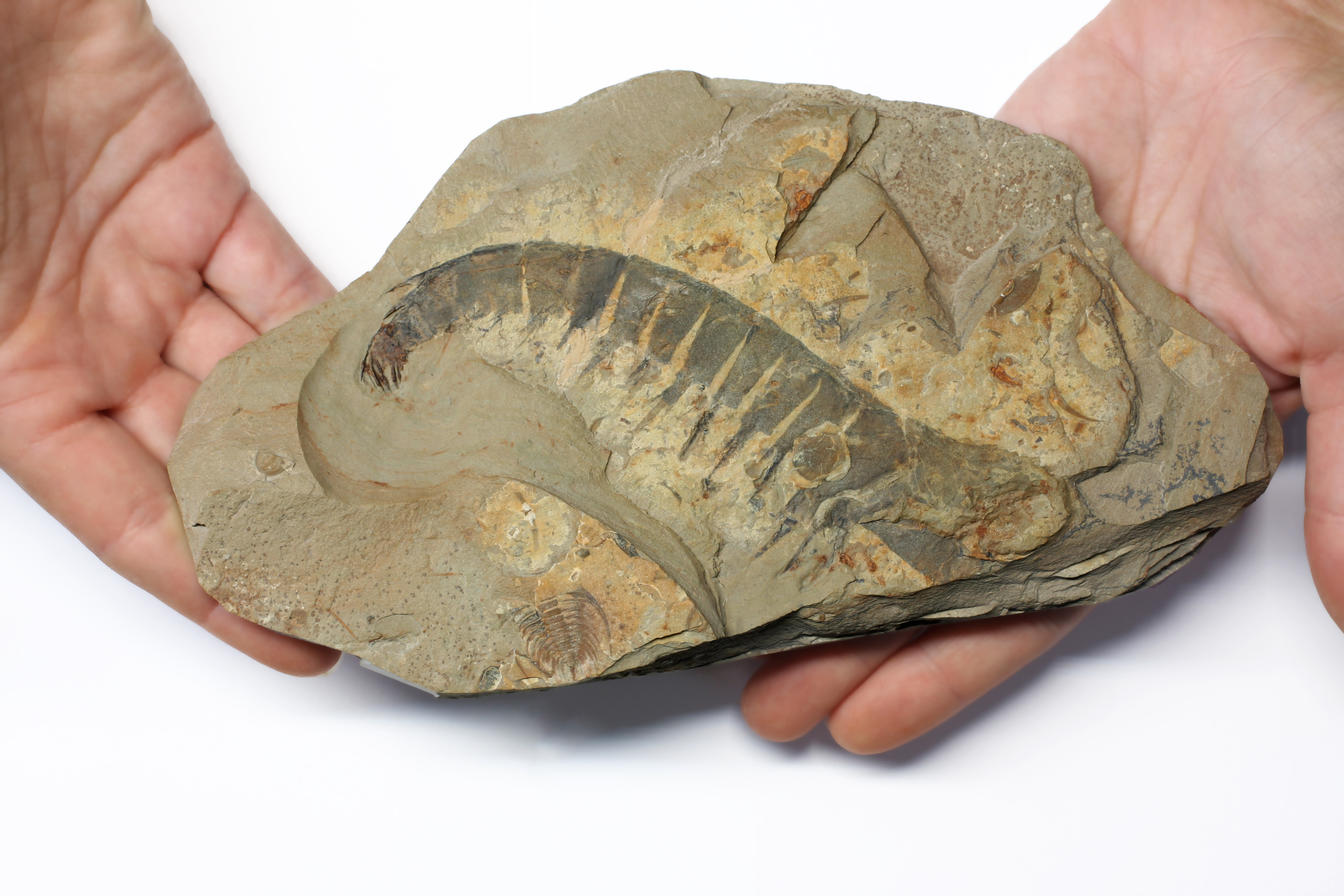
Anomalocaris – Everyone’s favorite and earliest apex predator. Even pieces and parts of this beast are incredibly rare and chased after. Specimens from the Lower Cambrian of the United States are particularly sought after with intense completion due to their extreme age and unusual inflation.
There are no localities that are productive for Anomalocaris or any of the similar radiodonts. Most specimens were chance encounters where the collector was not expecting to find them. Many were dirt road constructions in trilobite rich areas through the 1970’s-80’s. States like Utah, Nevada and California went through a revitalization period focused on old mining roads from the late 19th and early 20th centuries. These roads were quickly being reclaimed by natural forces. The work often exposed large shale beds via bulldozer work and the fossil collectors of that era were in the right place at the right time.
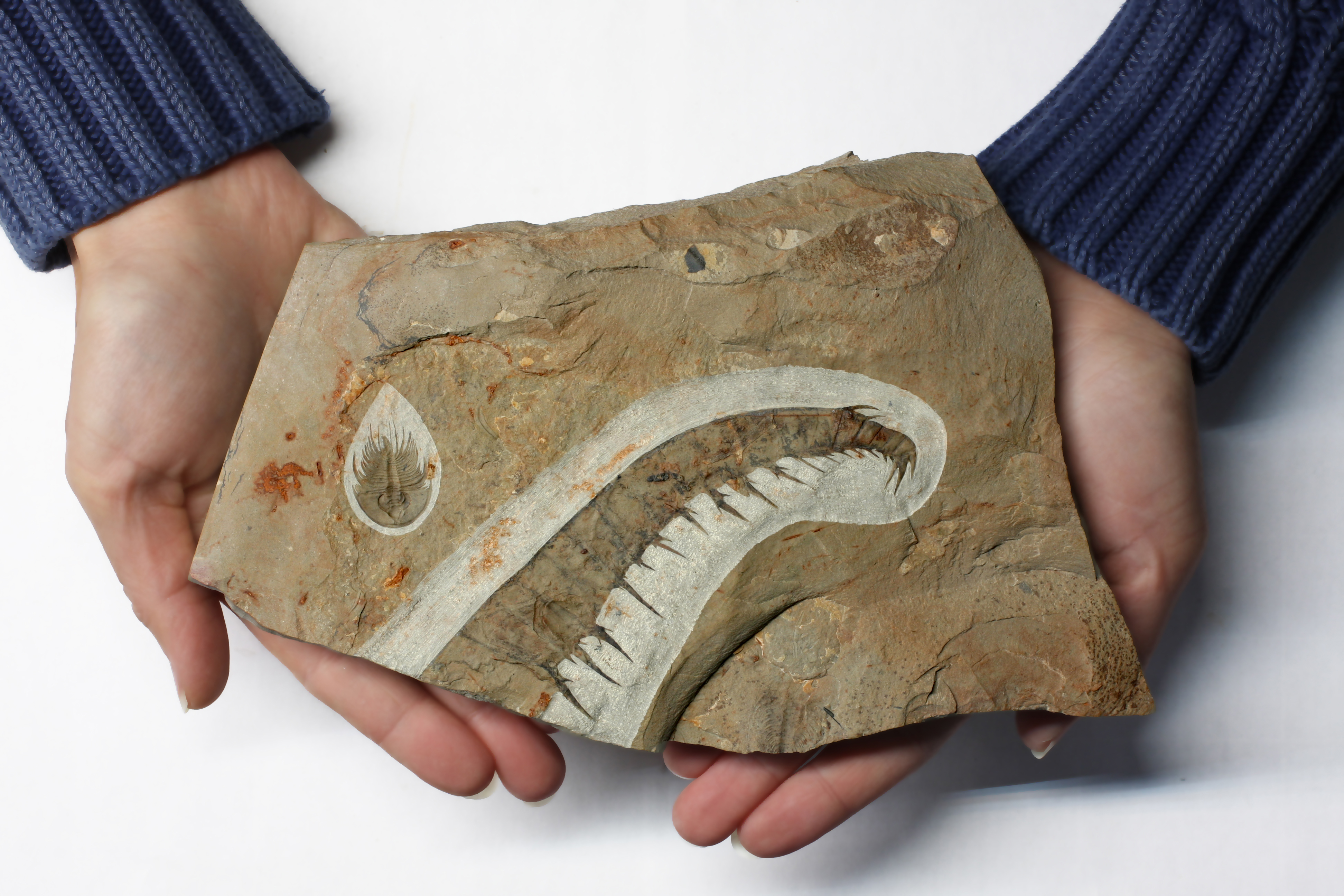
Many of these legendary specimens have seen the light of day recently, including two Lower Cambrian pieces with trilobites in close association with Anomalocaris appendages.
Lower Cambrian specimens
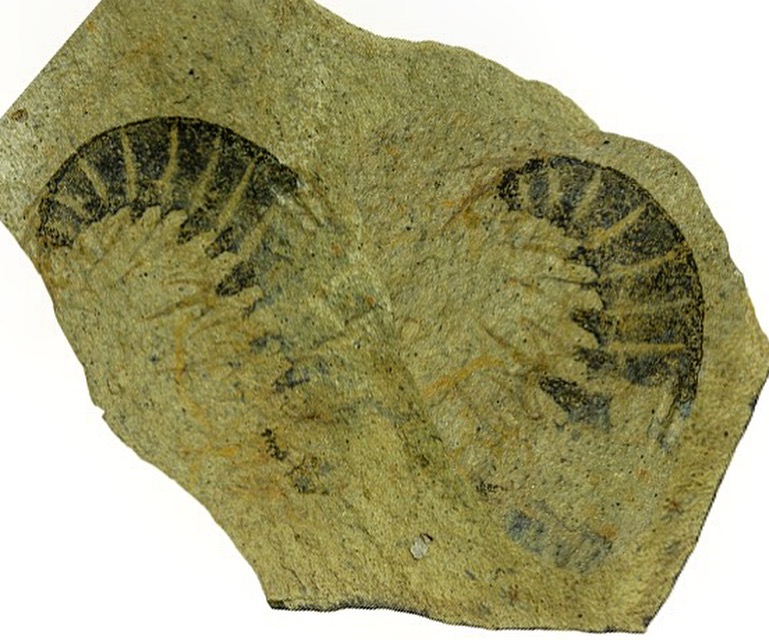
The Lower Cambrian examples are primarily historic finds from Nevada in the Pyramid and Pioche Shales. These particular species were large, with grasping appendages measuring above 10 cm and likely coming from an animal of 25-35cm. The exact species is questionable. Academia seems to bounce around on these. For now they are usually referred to as A. canadensis, A. saron and A. magnabasis. The genera tend to get shuffled about and renamed from time to time. We’re sticking with the classic species so as not to confuse the reader. No one wants to be forced to “read the book to understand the movie”. Whatever the species, they are large, hyper-rare and incredibly beautiful. If a renamed species sticks for several years we’ll adjust.
Classification
| Class | Dinocaridida |
| Order | Radiodonta |
| Family | Anomalocarididae |
| Genus | Anomalocaris |
Middle Cambrian specimens
Nevada and Utah produced limited Anomalocaris material, with Utah being much more common in doing so. Nevada specimens from the Middle Cambrian are extremely rare, with just a handful of examples. Specimens from Utah have been found throughout the Middle Cambrian suite of rocks especially in the Wheeler Amphitheater and the Drum Mountains.
Late Ordovician specimens
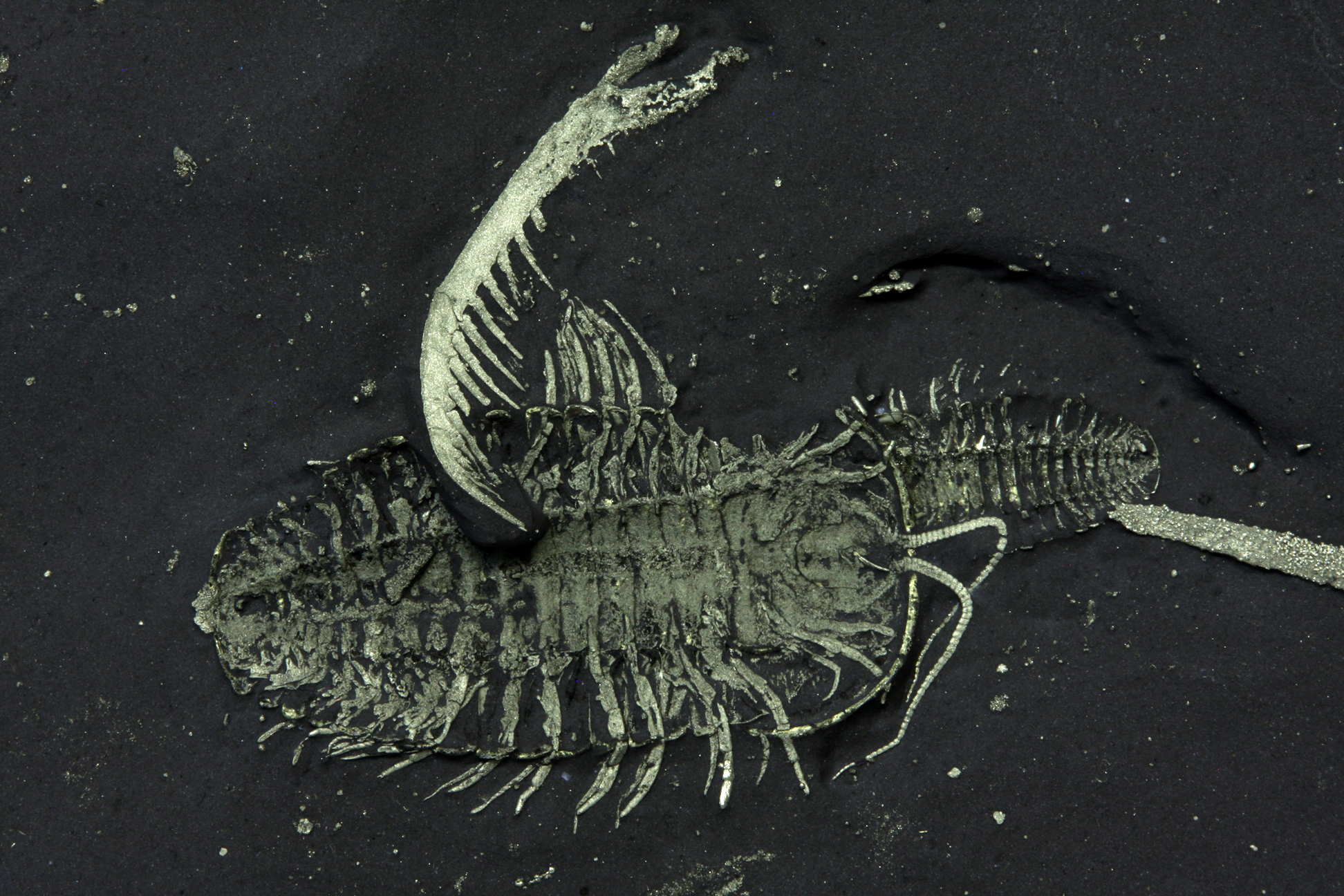
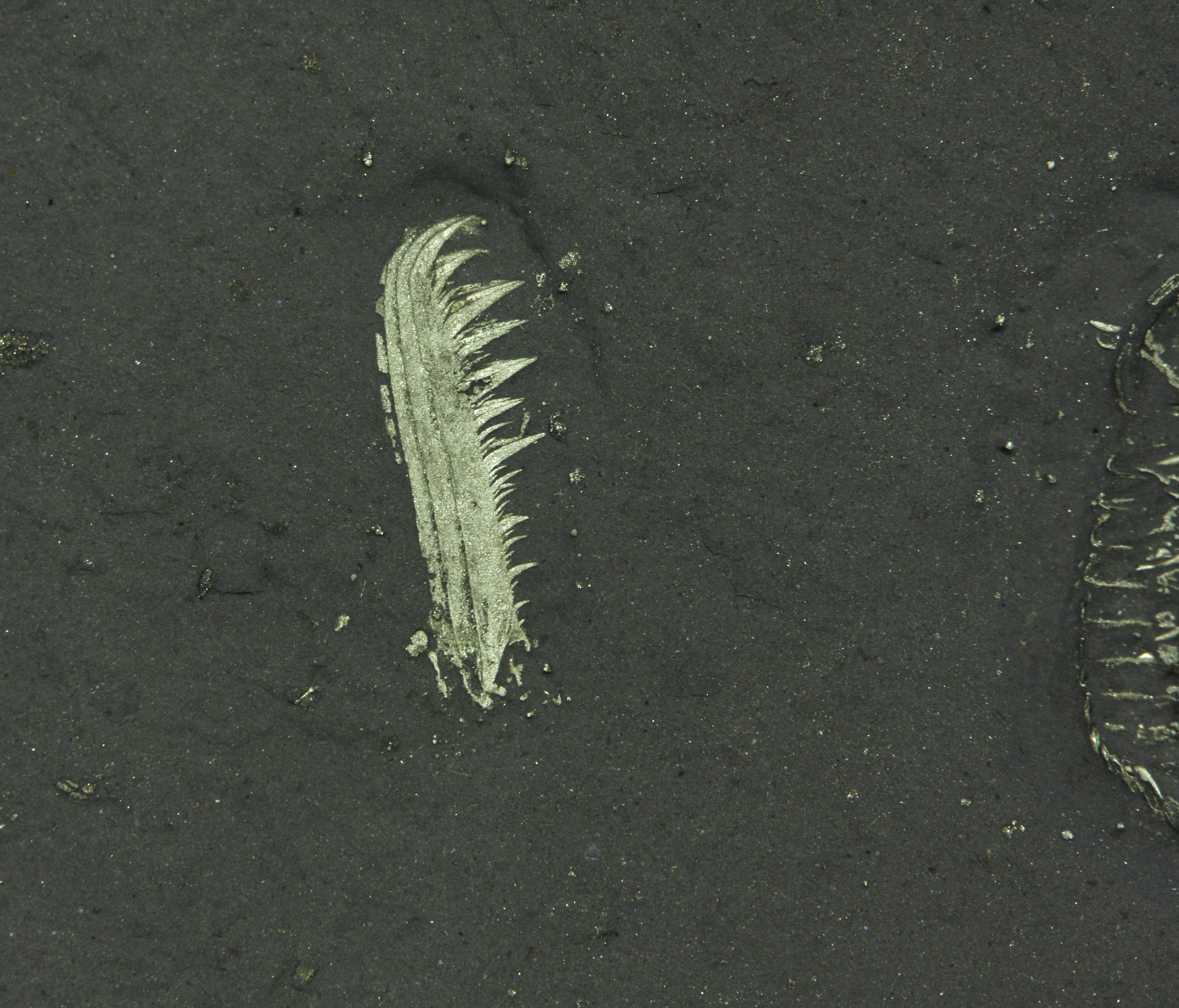
Beecher’s Trilobite Bed in New York has produced rare examples of presumably Radiodont frontal appendages. These are completely undescribed. A famous specimen featuring three large Triarthrus eatoni trilobites with legs and antennae, along with an Anomalocaris-like appendage fused to one of the trilobites was found in the previous decade. These appendages may be from another type of “Great-Appendaged Arthropod”. Anomalocaris occurred as late as the Lower Devonian (Germany).
Anomalocaris / Radiodonts across the intervals
Lower Cambrian of Nevada
Pioche Formation, Carrara Formation, and related units. Anomalocaris (including A. magnabasis) and related radiodonts occur. Frontal appendages are the most common remains; a small number of extremely rare, well-preserved frontal appendages have also been recovered.
Middle Cambrian of Utah and Nevada
Spence Shale, Wheeler, Marjum, and Weeks Formations (Utah) plus equivalent Nevada intervals. Anomalocaris persists, with some of the youngest Laurentian occurrences in the Weeks Formation. Isolated frontal appendages dominate; a few extremely rare higher-quality examples are known.
Late Ordovician — Beecher’s Trilobite Bed
Although previously unreported in the published literature, a small number of radiodont frontal appendages (approximately 15 specimens) have been collected from Beecher’s Trilobite Bed. These represent a significant extension of the radiodont record into the Late Ordovician of Laurentia.