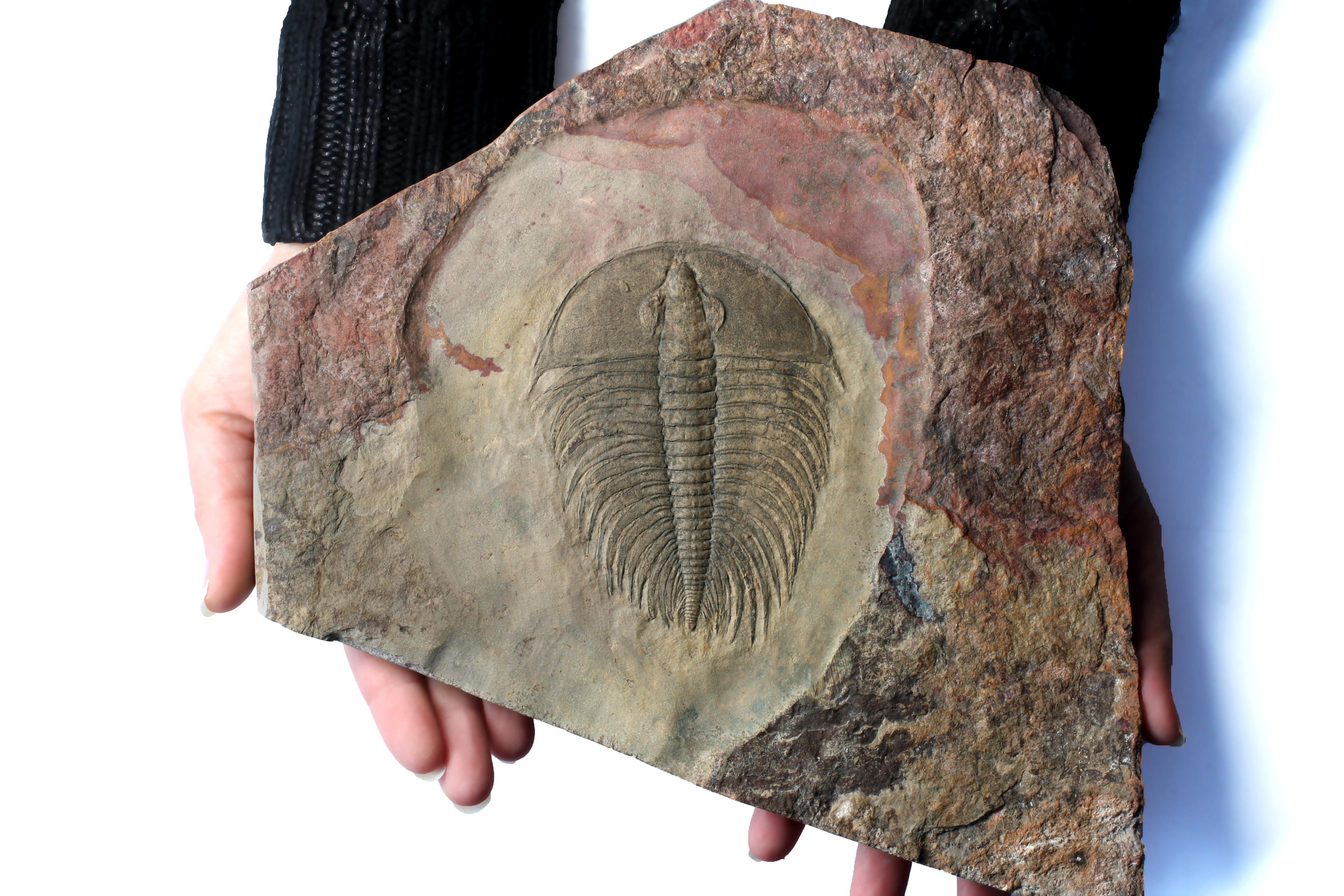
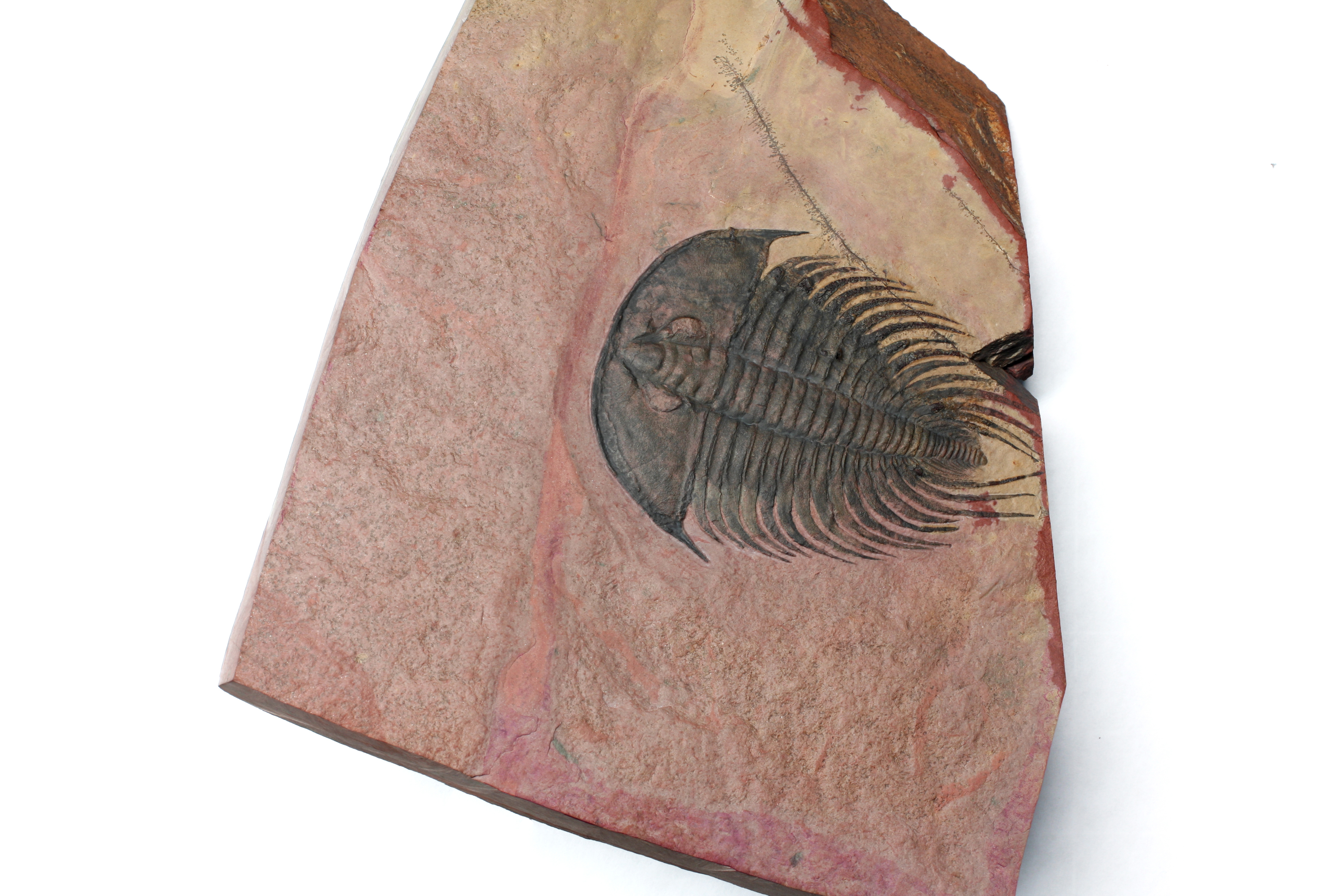
Nevadia weeksi
Lower Cambrian
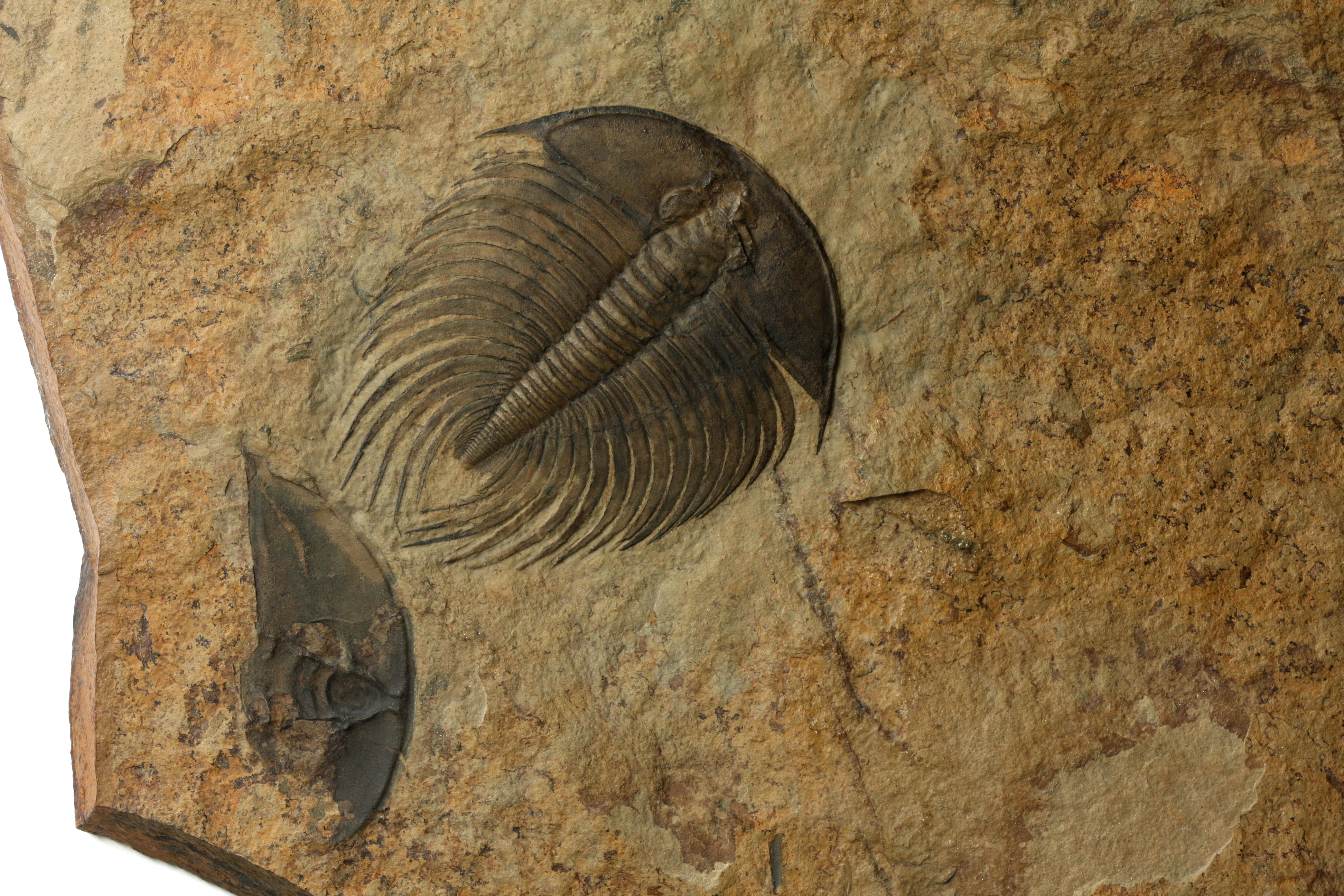
Nevadia weeksi are one of the most ancient trilobites-appearing just after the reign of the Fallotaspids, the first trilobites to appear in the fossil record in the Lower Cambrian. Good specimens of Nevadia are very hard to come by. Epic specimens are mostly non-existent-with a good collection viewable on this page. These trilobites occur in thick, dense silty material in the high mountain regions of Western Nevada. Collecting these rare trilobites was a difficult task involving high elevation, washed out mountain roads, and the biggest tools one could haul up a mountain side. When one applies the term “collecting” to Nevadia weeksi trilobites, it does not mean surface collecting or digging small holes – it’s moving rock by the tonnage. Extracting large rock platforms with sledgehammers and steel wedges over the course of several days or weeks if one had the time. A week was often not long enough for a truly epic and large specimen. Nevadia shared the rock primarily with the equally rare and sought after trilobite, Esmeradina rowi. Large, perfect specimens of Nevadia weeksi are on many collectors and art galleries bucket lists.
Habitat and Environment
Nevadia weeksi inhabited shallow, nearshore marine environments along the western margin of the paleocontinent Laurentia (present-day western United States), particularly in what is now eastern California (Inyo-White Mountains) and Nevada (Esmeralda County and Goldfield areas).
Fossils are primarily preserved in siltstone and shale layers of the Montenegro Member of the Campito Formation or the Poleta Formation, which represent low-energy, subtidal to intertidal depositional settings with fine-grained sediments indicative of quiet, protected coastal waters.
These habitats were part of a broader epicontinental sea system, with evidence suggesting soft, muddy substrates that supported diverse benthic (seafloor) communities during the Nevadella Biozone and Nevadia-Holmia Faunule assemblages.
Classification
| Class | Trilobita |
| Order | Redlichiida |
| Suborder | Olenellina |
| Family | Nevadiidae |
| Genus | Nevadia |
| Species | N. weeksi |
Ecological Role and Lifestyle
As a typical olenelline trilobite, Nevadia weeksi was a benthic epifaunal organism, meaning it lived on the surface of the seafloor rather than burrowing into the sediment. It is inferred to have been a fast-moving, low-level deposit feeder, actively crawling across the substrate to consume organic detritus, microbial films, and fine particulate matter stirred up from the mud—essentially acting as a seafloor scavenger or detritivore that contributed to nutrient recycling in the ecosystem.
Its morphology supports this: a flat, lightly calcified exoskeleton (up to ~15cm long, drop-shaped outline) allowed for efficient movement on soft bottoms, while long, sickle-shaped pleural spines on the 27-segment average thorax likely served defensive purposes against predators or aided in stability during locomotion. Like other trilobites, it underwent periodic molting (ecdysis), and fossil evidence often shows injuries or abnormalities in thoracic segments, possibly from failed molts, encounters with predators, or environmental hazards during this vulnerable phase.
Community Interactions
Nevadia weeksi coexisted with other early Cambrian invertebrates in the Nevadia-Holmia Faunule, including holmiid trilobites like Esmeraldina rowi and primitive echinoderms or brachiopods, forming part of a low-diversity but rapidly evolving benthic assemblage that marked the transition from pre-trilobite faunas. Its role as a mobile detritivore likely positioned it as a primary consumer in this food web, bridging microbial decomposers and higher-level suspension or predatory feeders. The species’ presence also aids biostratigraphy, helping correlate global Early Cambrian events, and it is considered a direct ancestor to later trilobites like Olenellus fowleri. Overall, N. weeksi exemplifies the adaptive radiation of arthropods in oxygenating, nutrient-rich Lower Cambrian seas, where spinose body plans enhanced survival in predator-scarce but physically dynamic coastal zones.