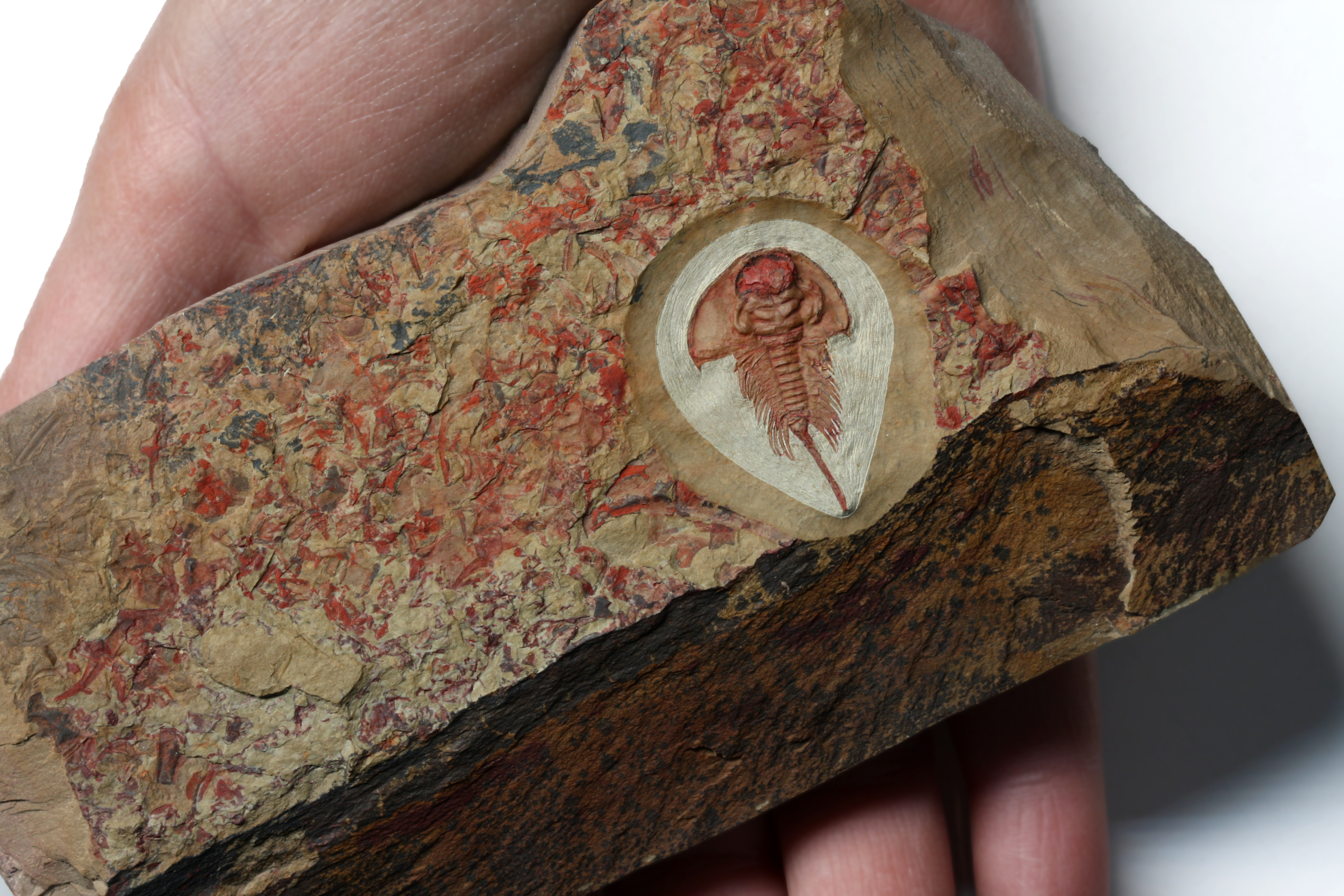
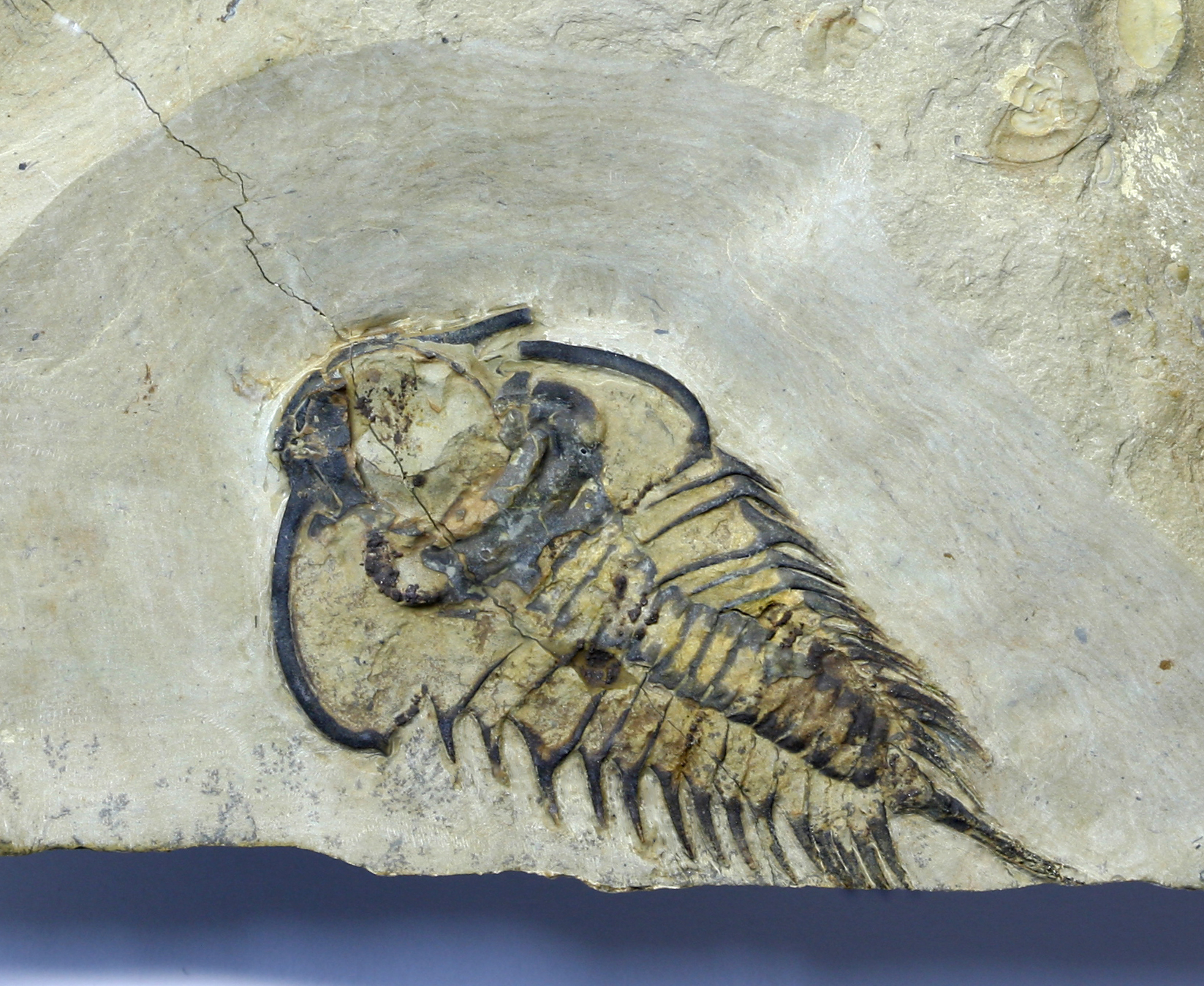
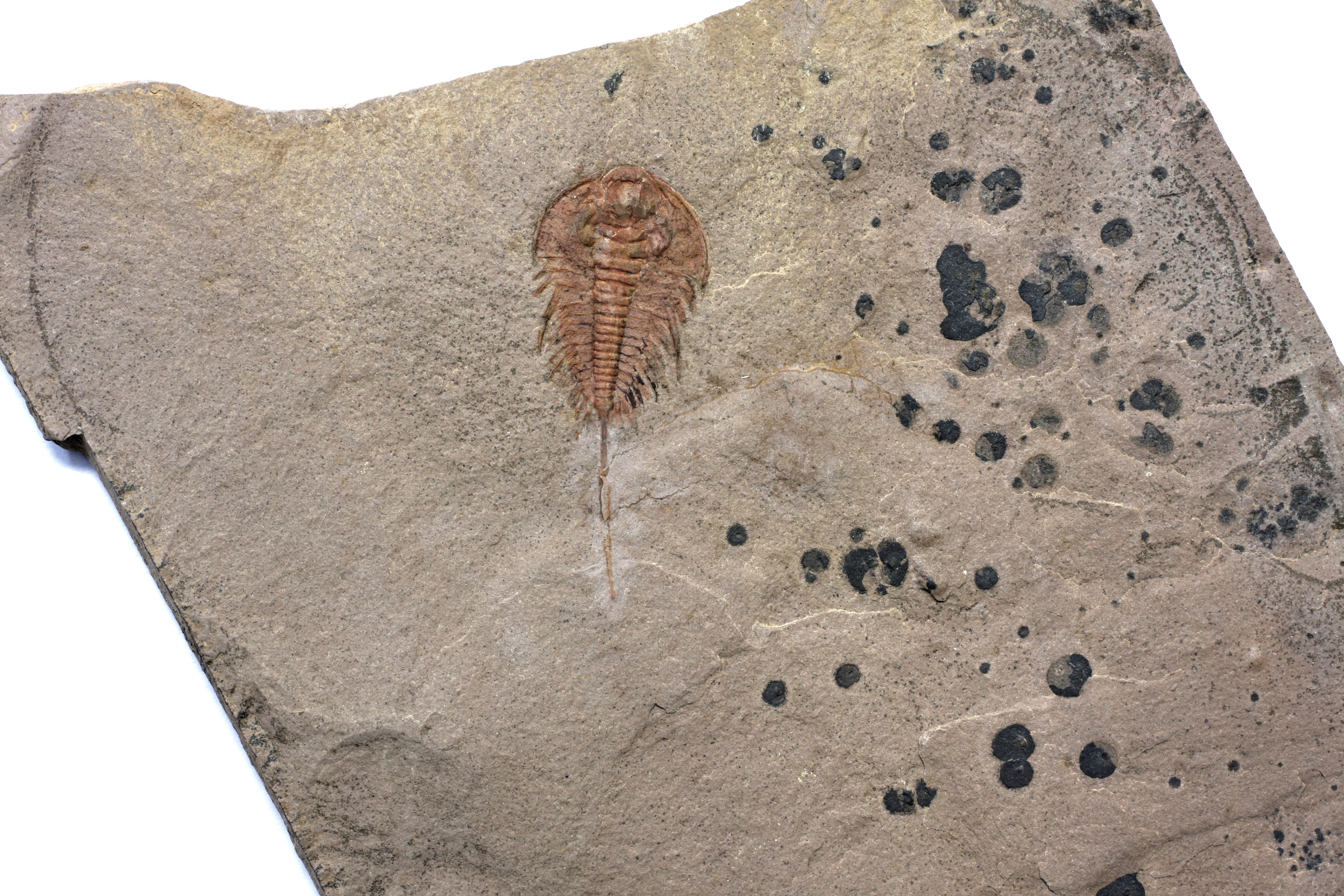
Bolbolenellus brevispina
Lower Cambrian
Bolbolenellus brevispina is one of the rarest and most distinctive biceratopsid trilobites of the Lower Cambrian, known primarily from Nevada and adjacent parts of California. Complete, articulated specimens are exceptionally scarce. The genus appears to have had both low population density and unusually poor preservation potential compared with the far more common olenellids that shared the same beds—most likely the result of a thin, lightly mineralized cuticle that disarticulated or dissolved readily after death.
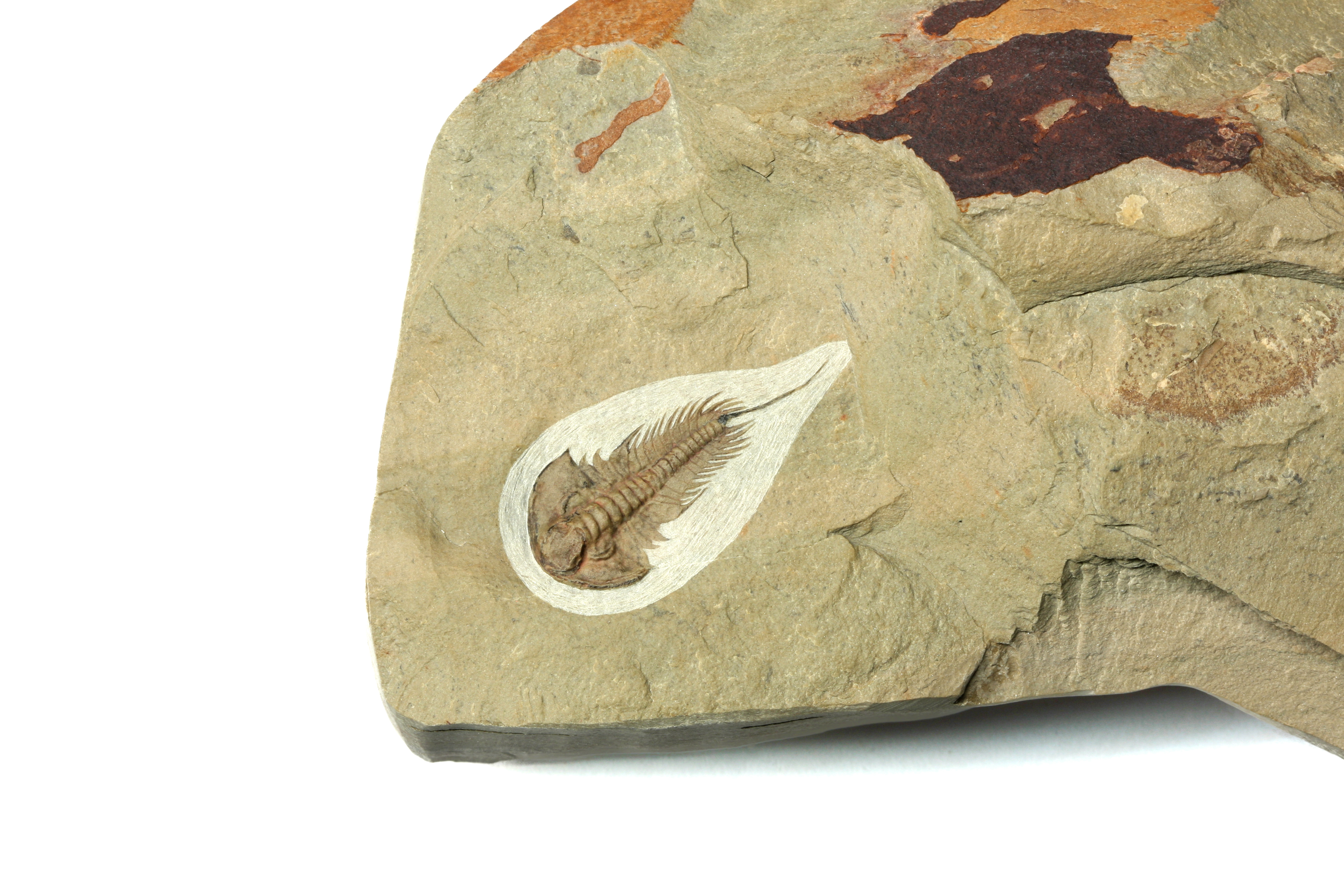
The most striking feature of the genus is its large, strongly inflated frontal glabellar lobe, which gives Bolbolenellus its name and immediately separates it from typical olenellids. Combined with its short pleural spines and nearly absent genal spines, the overall appearance is unlike almost any other Early Cambrian trilobite. For decades, finding a fully articulated example has been something of a collector’s quest—and for most, an unsuccessful one. They simply did not appear with any regularity, even in productive horizons. When good specimens did surface, they are immediately recognizable and highly valued for both their rarity and their unusual morphology.
Species Overview
Bolbolenellus brevispinus belongs to the genus Bolbolenellus in the family Biceratopsidae (order Redlichiida, suborder Olenellina), representing one of the more unusual late Early Cambrian trilobite lineages. It lived during the latest Dyeran stage (uppermost Olenellus Zone), approximately 515–510 million years ago, making it a rare component of the terminal phases of the Cambrian explosion’s diversification of marine arthropods.
Classification
| Class | Trilobita |
| Order | Redlichiida |
| Suborder | Olenellina |
| Family | Biceratopsidae |
| Genus | Bolbolenellus |
| Species | B. brevispina |
Habitat And Environment
Bolbolenellus brevispinus inhabited shallow, nearshore marine environments along the western margin of the paleocontinent Laurentia (present-day western United States), particularly in what is now eastern Nevada. Fossils are known from siltstone and shale layers of the Pioche Formation, which represent low-energy, subtidal to intertidal depositional settings with fine-grained sediments indicative of quiet, protected coastal waters. These habitats formed part of a broader epicontinental sea system supporting late Dyeran benthic communities.
Ecological Role And Lifestyle
As a biceratopsid olenelline trilobite, Bolbolenellus brevispinus was a benthic epifaunal organism living on the seafloor. It is inferred to have been a mobile, low-level deposit feeder, consuming organic detritus and microbial material. Its morphology is distinctive among olenellids: a markedly inflated frontal glabellar lobe, very short pleural spines, and nearly absent genal spines. The thin cuticle likely contributed to its rarity as complete specimens. Like other trilobites, it underwent periodic molting.
Community Interactions
Bolbolenellus brevispinus occurred alongside other terminal Early Cambrian trilobites in the uppermost Olenellus Zone, including Olenellus gilberti, Olenellus terminatus, Olenellus chiefensis, Nephrolenellus geniculatus, and related forms. It formed part of a low-diversity but distinctive late Dyeran assemblage just prior to the major olenellid extinction. Complete specimens are extremely rare, reflecting both the thin exoskeleton and limited suitable preservation windows. The species holds biostratigraphic value as a marker of the final olenellid-bearing intervals in the Great Basin.