Beecher’s Trilobite Bed – Triarthrus eatoni: Pyritized Ordovician Trilobite Fossils & Soft Tissue Preservation
Late Ordovician
Beecher’s Trilobite Bed stands as one of the most remarkable fossil sites in the world, a Konservat-Lagerstätte, characterized by the exceptional preservation of fossils, including soft tissues and delicate structures that are usually lost to decomposition and scavenging. Located in a small isolated area quarry in Oneida County, New York State, these thin layers of shale have yielded fossils that reveal intricate details of ancient marine life, including the delicate appendages and internal anatomy of trilobites—arthropods that dominated Paleozoic seas.
Dating back to the Late Ordovician Period, approximately 445 million years ago, the bed offers unparalleled insights into deep-water ecosystems, taphonomic processes (how organisms fossilize), and evolutionary adaptations in low-oxygen environments. Its significance extends beyond paleontology, influencing fields like geochemistry and ecology by demonstrating how rare conditions can “freeze” soft tissues in the rock record.
Discovery and History
The story of Beecher’s Trilobite Bed begins in 1892, when local fossil collector William S. Valiant stumbled upon the site while exploring the shale exposures in the area. The following year, Yale University paleontologist Charles Emerson Beecher, inspired by Valiant’s finds, initiated systematic excavations that lasted until 1895.
Beecher’s work uncovered many exquisitely preserved trilobites, leading him to publish groundbreaking papers on their soft tissue including legs, gill structures and the ventral (underside) anatomy—details rarely visible in typical fossils. Tragically, Beecher died in 1904, and much of his field notes, photographs, and the precise location of the quarry were lost or scattered among institutions, stalling further research for nearly a century. The site faded into obscurity until its subsequent rediscovery in the 1980’s. The site fell into obscurity again near the end of the 20th Century.
Markus Martin assumed excavations at Beecher’s from 2009 onward, where it has seen the most extensive excavation and research to date. These efforts revealed not just the original “bed” but many additional fossil-rich horizons nearby with exceptional preservation and new, never before seen fauna. Today, the site remains active as a hub for trilobite studies.
Classification
| Class | Trilobita |
| Order | Ptychopariida |
| Family | Olenidae |
| Genus | Triarthrus |
| Species | T. eatoni |

Beecher’s Trilobite Bed Classic Documentary Video Series
Discover the legendary Beecher’s Trilobite Bed through our exclusive video series. Explore the world’s best-preserved trilobites with soft tissue, the history of the site, its dramatic rediscovery, and the groundbreaking find of the first known trilobite eggs.
Managed by Fossils After Dark, this Ordovician fossil locality continues to produce exceptional pyritized specimens. Watch the full series below:
Geological Context
Beecher’s Trilobite Bed is embedded within the Frankfort Shale, part of the Lorraine Group suite of rocks, a sequence of fine-grained, dark mudstones deposited in a deep-marine basin during the Late Ordovician (Caradoc stage). This period, around 445–449 million years ago, marked a time of global sea-level rise and tectonic activity along the eastern margin of Laurentia (the ancient North American continent). The rocks here represent turbidite deposits—underwater sediment flows that carried fine silt and mud from shallower shelves into deeper basins, often triggered by storms or earthquakes.
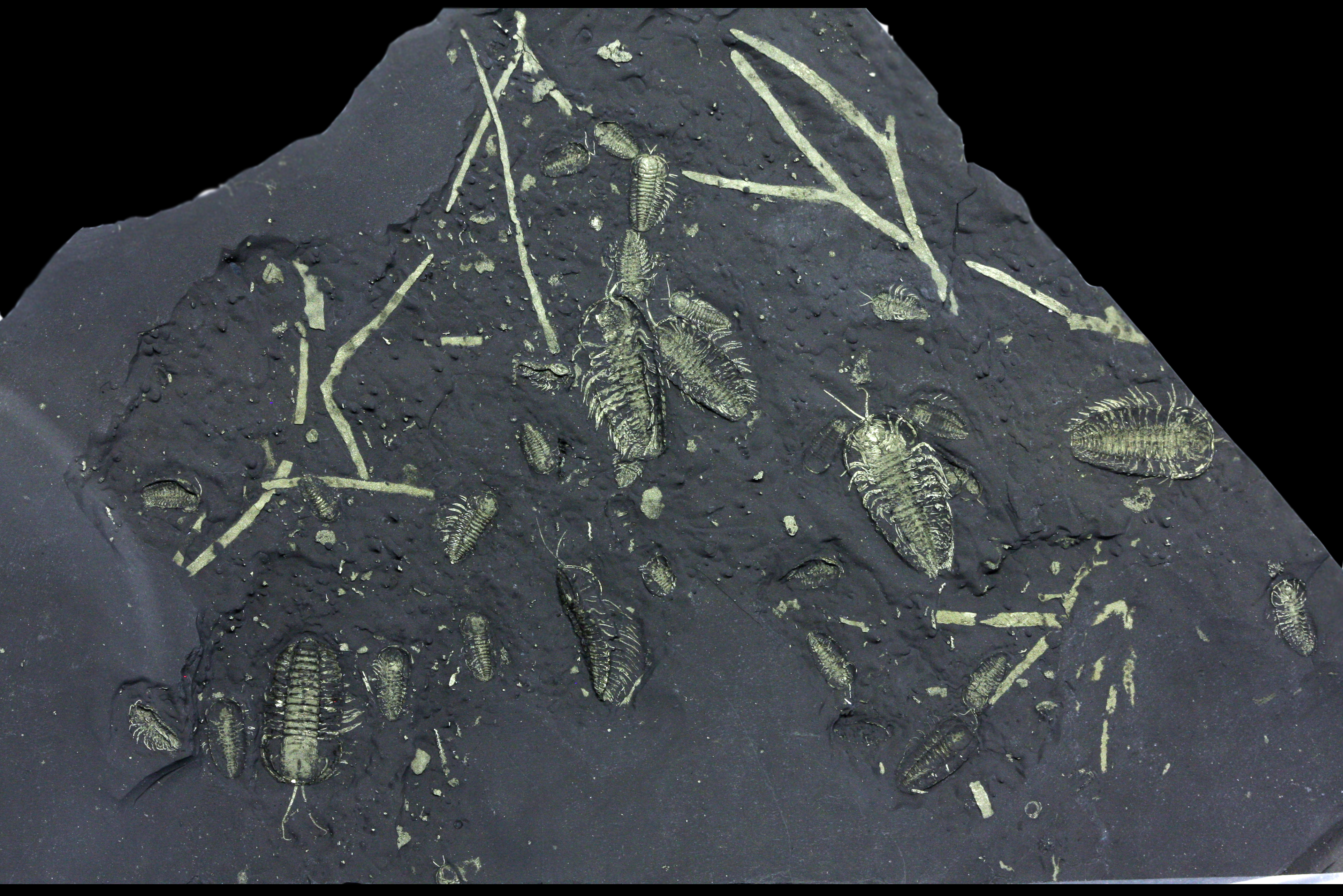
The original layer itself is remarkably thin, measuring just 3–4 centimeters (1.2–1.6 inches) thick, and lies within a succession of these turbidites. It rests on a scoured mudstone surface etched by prior currents, with faint remnants of burrows indicating sparse infaunal (burrowing) activity. Geochemically, the layer is iron-rich but low in organic carbon and sulfur, suggesting a dysoxic (low-oxygen) seafloor environment prone to periodic anoxic events. These conditions, combined with rapid burial by turbidity flows, created the perfect storm for exceptional preservation. Strong bottom currents during sediment deposition oriented the trilobites both upcurrent and downcurrent, as if caught mid-motion by a sudden sediment influx.
The bed’s fossils are densely packed, often overlapping, and show signs of rapid mortality—many trilobites exhibit enrolled postures or hypostomes (mouthparts) in feeding positions, implying they were buried alive during a catastrophic turbidity flow.
Fossils and Preservation
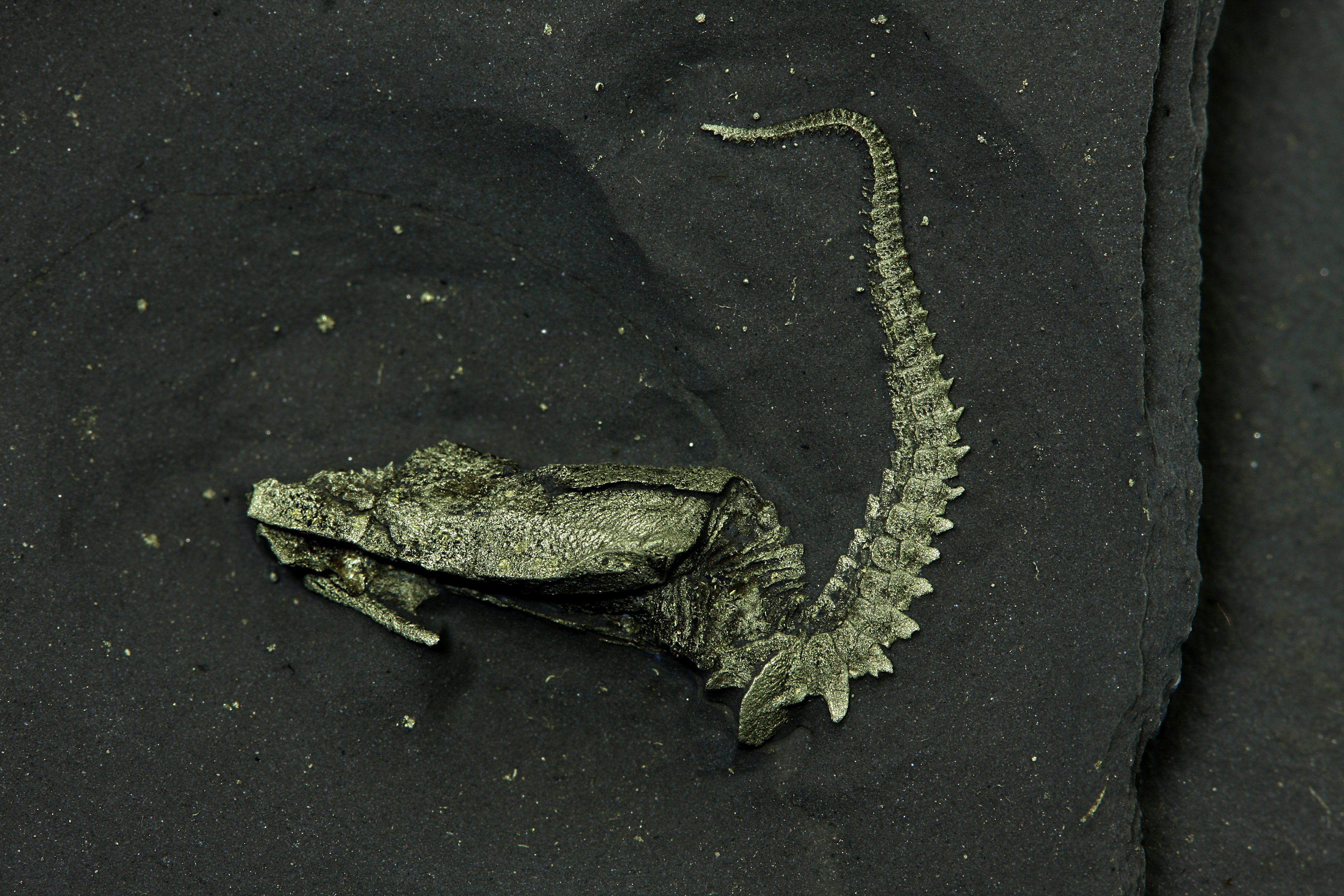
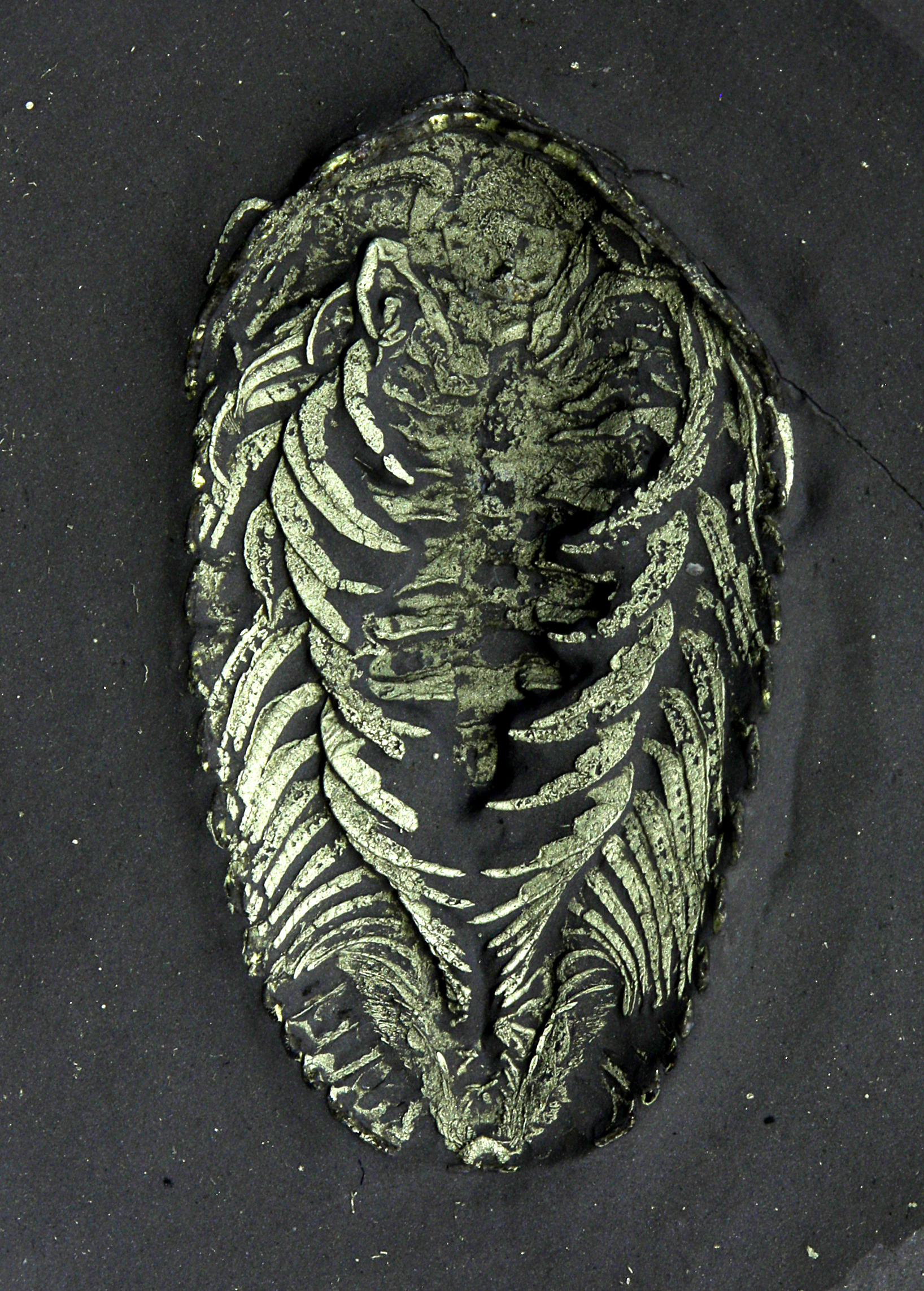
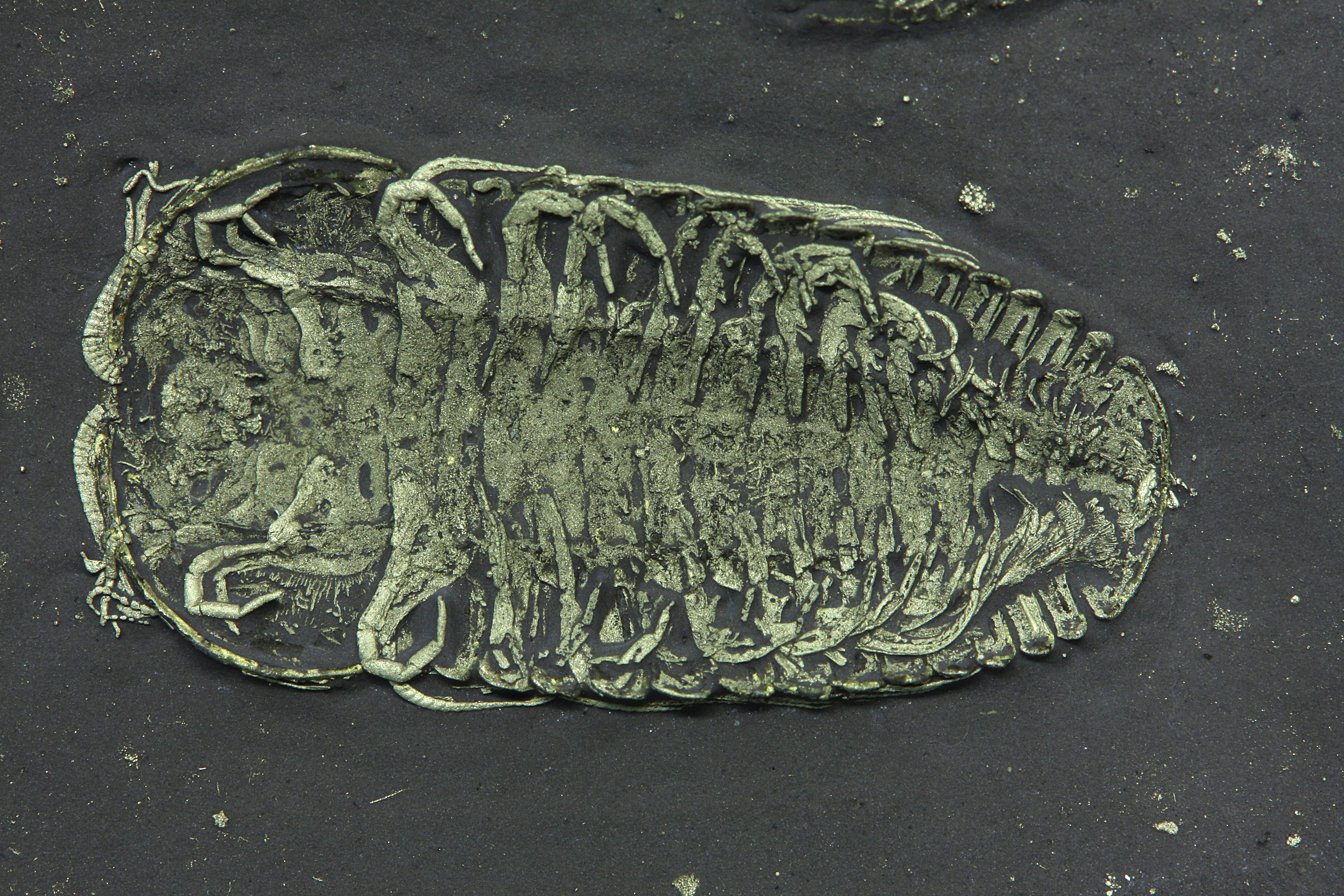
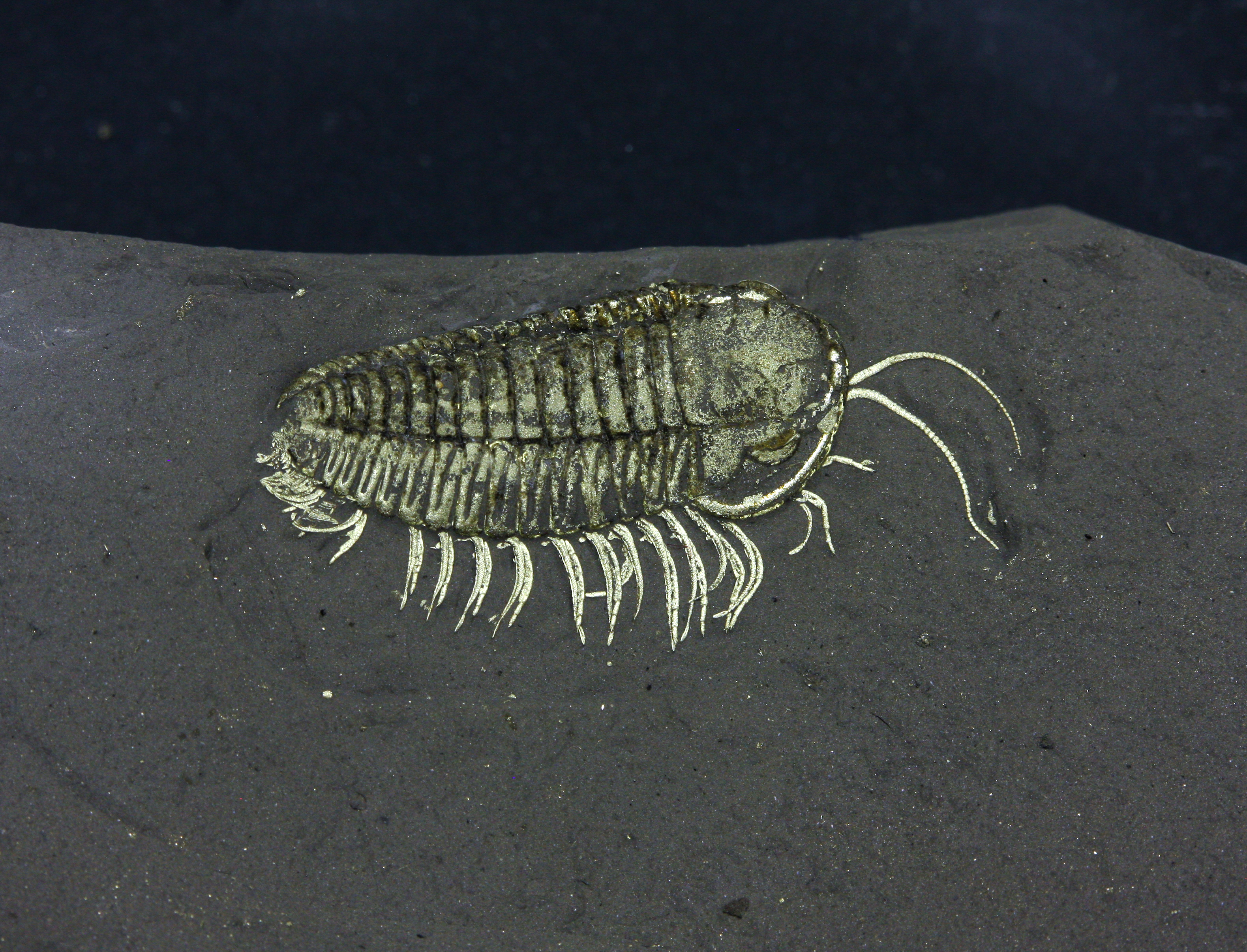
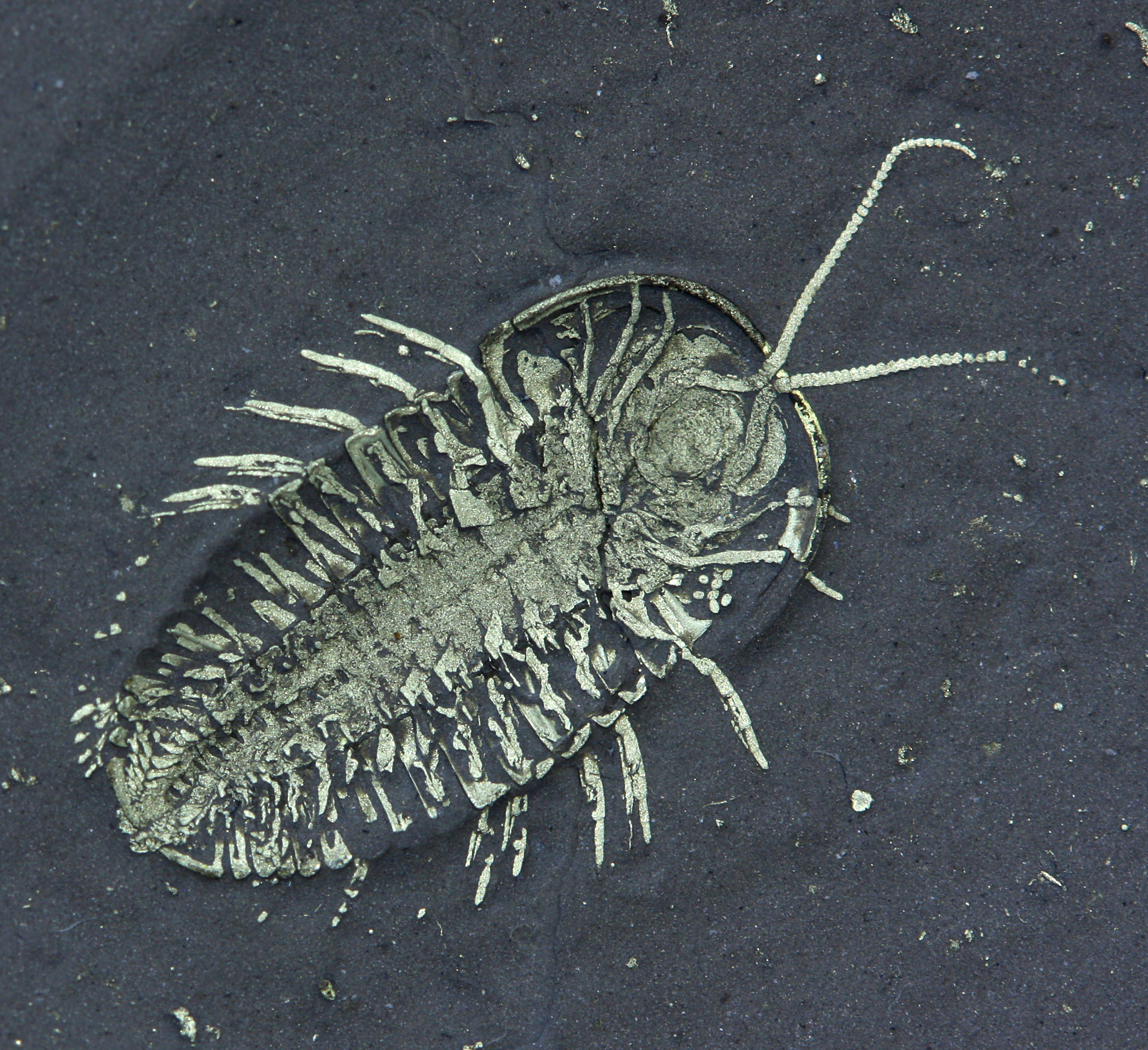
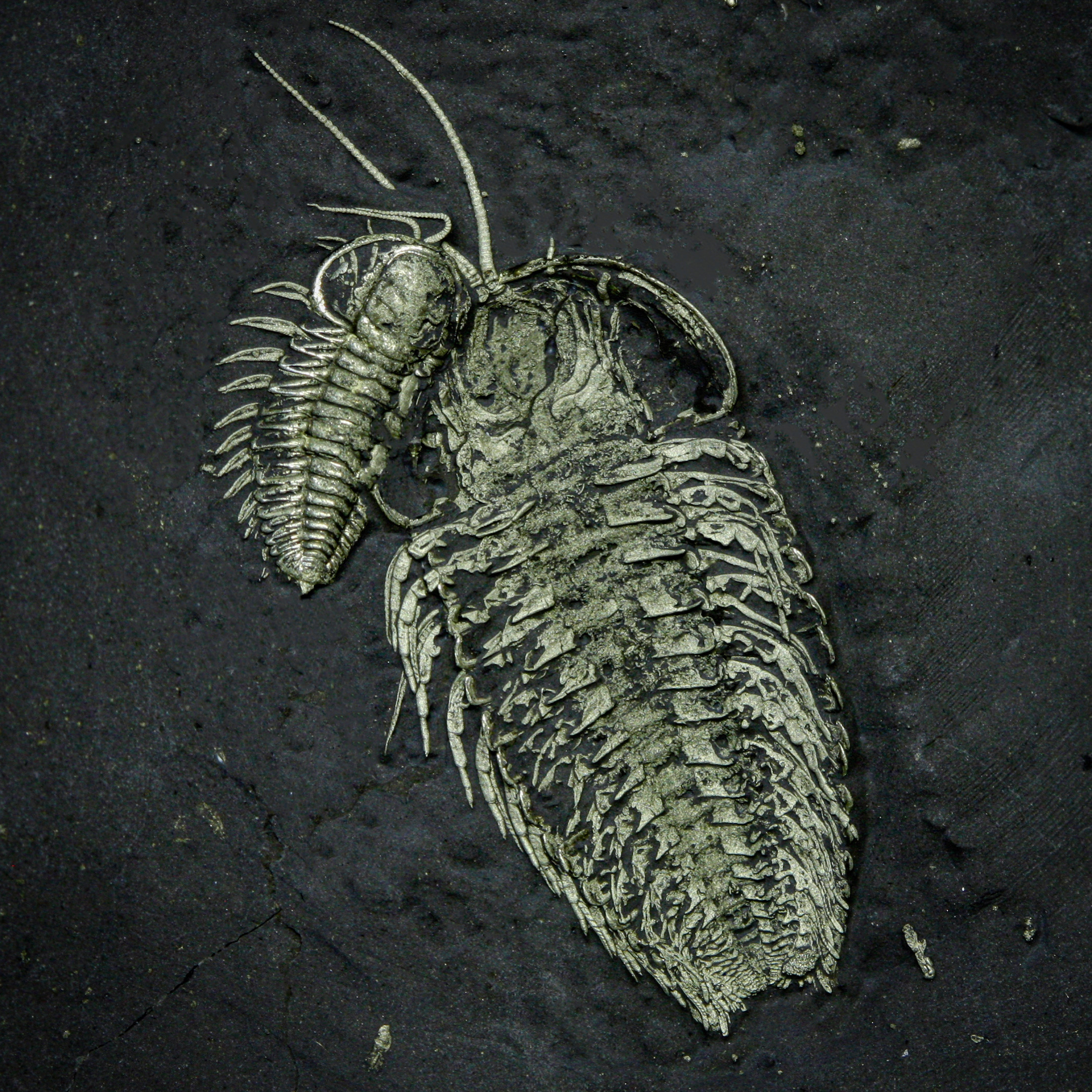
What makes Beecher’s Trilobite Bed truly extraordinary is its pyritization process, where iron sulfide (pyrite, or “fool’s gold”) replaces both hard exoskeletons and soft tissues. This mineralization occurred soon after death in an oxygen-poor, sulfate-rich seabed, where sulfate-reducing bacteria facilitated pyrite formation around decaying organic matter. The result? Delicate structures like antennae, biramous limbs, gill filaments, and even muscle fibers are preserved in three dimensions. Unlike typical compression fossils, these retain fine details, allowing for the reconstruction of locomotion and respiration of animals that lived nearly half a billion years ago.
The dominant fossil is the trilobite Triarthrus eatoni (the last olenid trilobite), comprising about 85% of the assemblage—small to medium-sized scavengers adapted to life in the murky depths. Other trilobites include Cryptolithus bellulus, Cornuproetus beecheri, Primaspis crosotus, along with several undescribed species. Beecher’s faunal diversity was considered to be extremely limited by previous researchers, an opinion that was fashionable as recent as the early 2000’s. The past decade greatly expanded the known fauna of the site due to more detailed, systematic excavations and cutting edge preparation equipment brought to bear on the discovered fossils. The faunal list has greatly expanded to include many genera of non-trilobite arthropods, sea stars, ophiuroids, crinoids, lobopods, rare chordates, crustaceans and radiodonts.
Ecology and Paleoecology
The layers capture a snapshot of an Ordovician deep-water community thriving in a dysoxic basin plain, far from sunlight and at depths likely exceeding 200 meters. Triarthrus eatoni acted as a key deposit-feeder, grazing on organic detritus rained down from surface waters, its biramous appendages optimized for crawling and filter-feeding. Graptolites and brachiopods suspended above the seafloor, sifting plankton, while echinoderms and nautiloids suggest opportunistic predation. Annelids, inferred from trace fossils and rare carcasses, burrowed shallowly, aerating the sediment.
Taphonomic evidence points to episodic turbidity flows as the killers: these events smothered the seafloor, entombing live communities in anoxic mud. The low diversity reflects oxygen stress, but the high abundance of preservable taxa indicates a resilient, opportunistic ecosystem. Compared to contemporaneous shallow reefs teeming with life, this deep-sea assemblage underscores the “hidden” biodiversity of ancient oceans.
Scientific Significance
As a premier example of soft-tissue preservation, Beecher’s rivals sites like the Burgess Shale, Germany’s Hunsrück Slate or France’s La Voulte-sur-Rhône, but it’s unique for Ordovician fauna. It has revolutionized our understanding of early reproduction in the fossil record with the discovery of Triarthrus trilobites carrying eggs, as well as small crustaceans called ostracods, carrying both eggs and juveniles.
The site has also single handedly formed the basis of our understanding of trilobite functional morphology—revealing, for instance, how Triarthrus used its endopods for walking and exopods for swimming/gas exchange (respiration). Broader implications include taphonomy: pyritization here demonstrates how microbial activity and geochemistry can outpace decay, informing models for other Lagerstätten. Ecologically, it bridges Paleozoic and modern deep-sea faunas, challenging assumptions about “progressive” biodiversity through time.