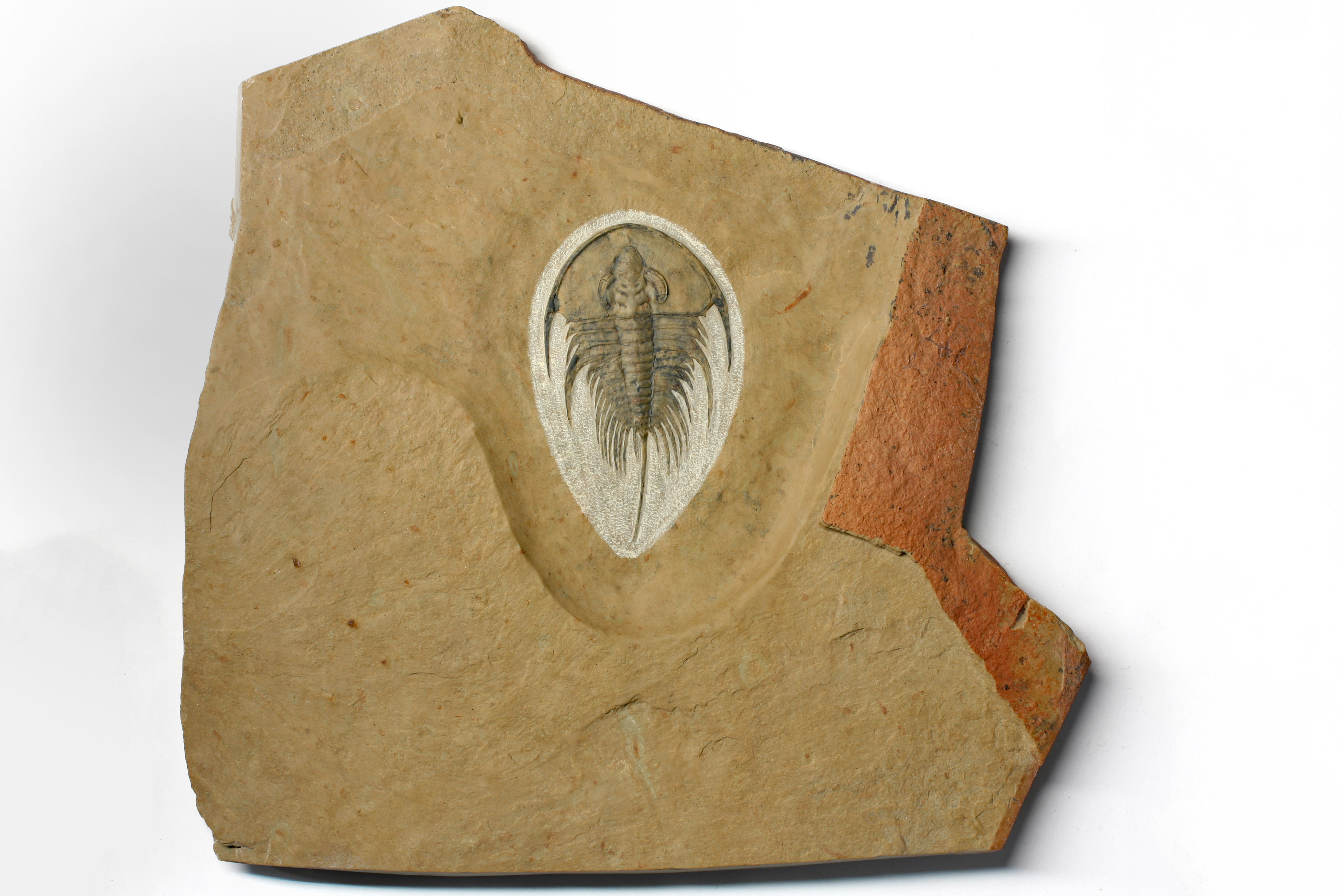
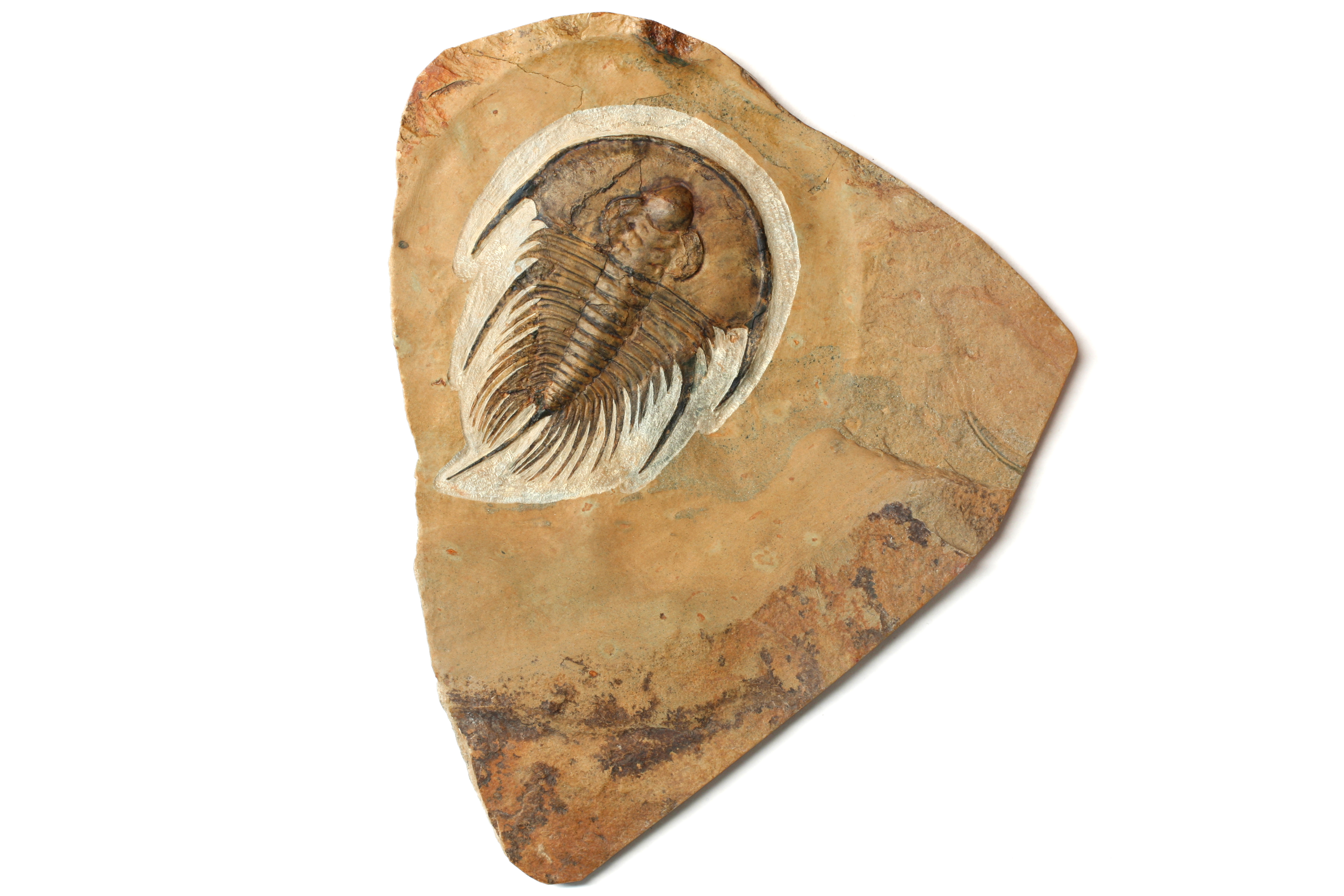
Olenellus nevadensis
Lower Cambrian
Olenellus nevadensis is one of the most beautiful olenellid species. With its sharp tapering thorax and extra long pleural spines it is a striking species. It occurs amongst Bristolia species and Mesonacis fremonti in the Bristolia zonule. Good examples of this species are very scarce. Like most trilobites in the Bristolia zone they just don’t seem to hold together post burial. Scavenging, shifting sediments, decay-probably all contributors. The species has the ability to get big-up to 8-10 inches-but I’ve never seen complete examples over 5 or 6 inches. The species is quite spiny, even for an Olenellus. The abbreviated glabella and small, spiky intergenal spines differentiate O. nevadensis from other genera.
Geological Context
Olenellus nevadensis is a classic olenellid trilobite from the Lower Cambrian (Series 2, Stage 4). It occurs within the Olenellus Zone, often in association with the Bristolia faunal interval in shallow marine strata across the Great Basin. The species is typically found in fine-grained siliciclastic sediments, particularly dark shales and siltstones deposited in low-energy, subtidal to intertidal settings on a broad carbonate-siliciclastic shelf. These quiet-water deposits formed during transgressive phases of Early Cambrian sea-level rise and frequently preserve characteristic shallow-marine benthic communities.

Classification
| Class | Trilobita |
| Order | Redlichiida |
| Suborder | Olenellina |
| Family | Olenellidae |
| Genus | Olenellus |
| Species | O. nevadensis |
Fossils and Preservation
Specimens of O. nevadensis display the typical olenellid morphology, including a large semi-circular cephalon, prominent genal spines, and a multi-segmented thorax ending in a small pygidium. Adult individuals are generally of moderate size compared to some of their contemporaries. Preservation is most commonly as compressed molds or low-relief impressions in fine shale. Complete articulated specimens are rare; most recovered material consists of isolated cephala or partial thoraces. High-fidelity surface detail is limited to particularly favorable depositional horizons.
Ecology and Paleoecology
Olenellus nevadensis inhabited shallow subtidal to intertidal marine environments during the peak of the Cambrian radiation. It frequently co-occurs with other olenellid trilobites such as species of Bristolia, Mesonacis, and additional Olenellus taxa in relatively low-diversity benthic assemblages. As a benthic arthropod, it likely lived on or near the seafloor and was probably a detritivore or opportunistic feeder. Subtle morphological variation observed in the species may reflect responses to local environmental conditions or different growth stages.
Scientific Significance
Olenellus nevadensis is an important index fossil for the Olenellus Zone and helps illuminate the patterns of diversification and provincialism among early trilobites. Its occurrence alongside other olenellids provides valuable data for biostratigraphic correlation across the Great Basin. The species contributes to our broader understanding of Early Cambrian paleobiology, particularly the ecological structure of shallow marine communities during one of life’s most dramatic evolutionary radiations. The relative rarity of well-preserved material underscores the special taphonomic conditions required for the preservation of these early arthropods.