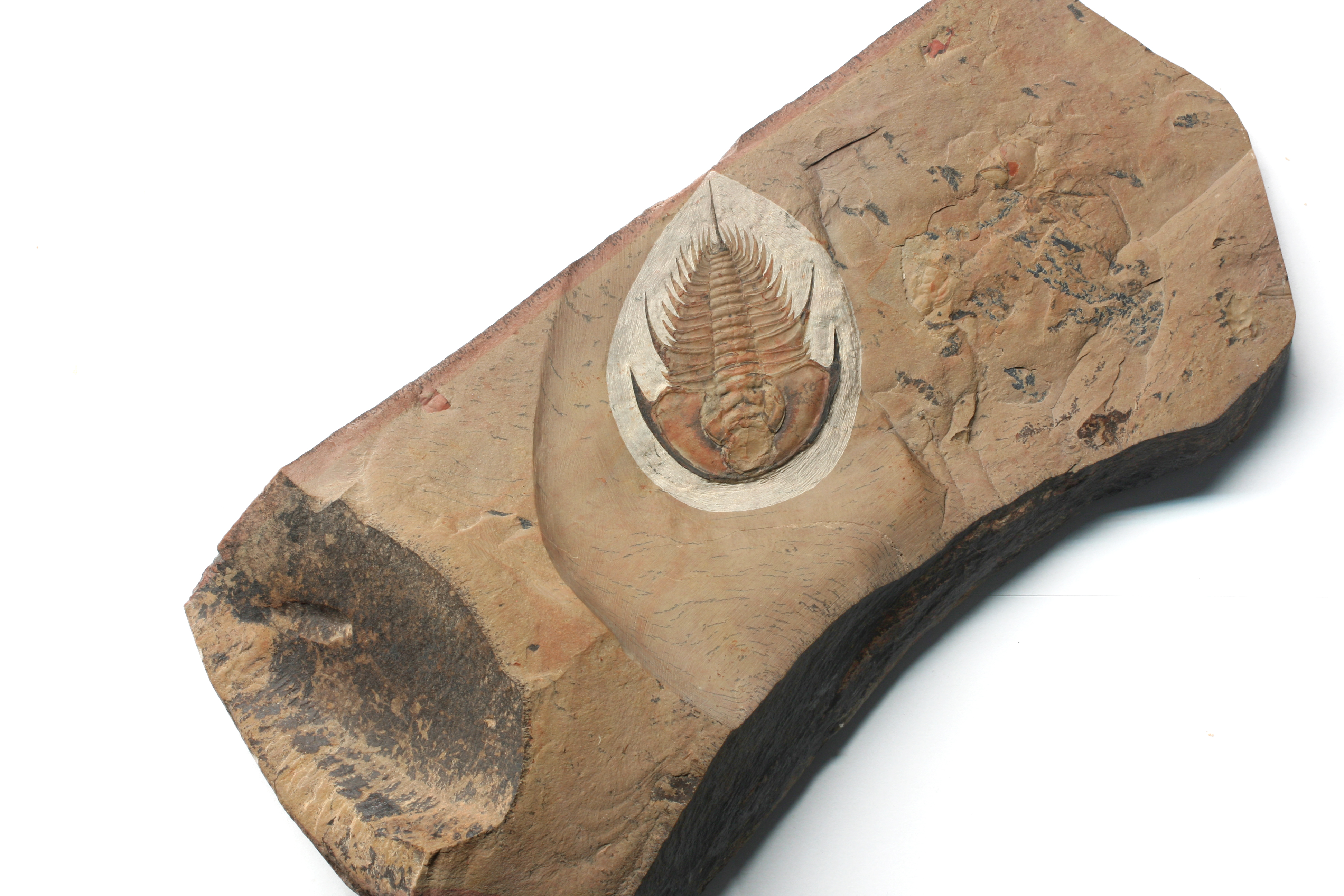
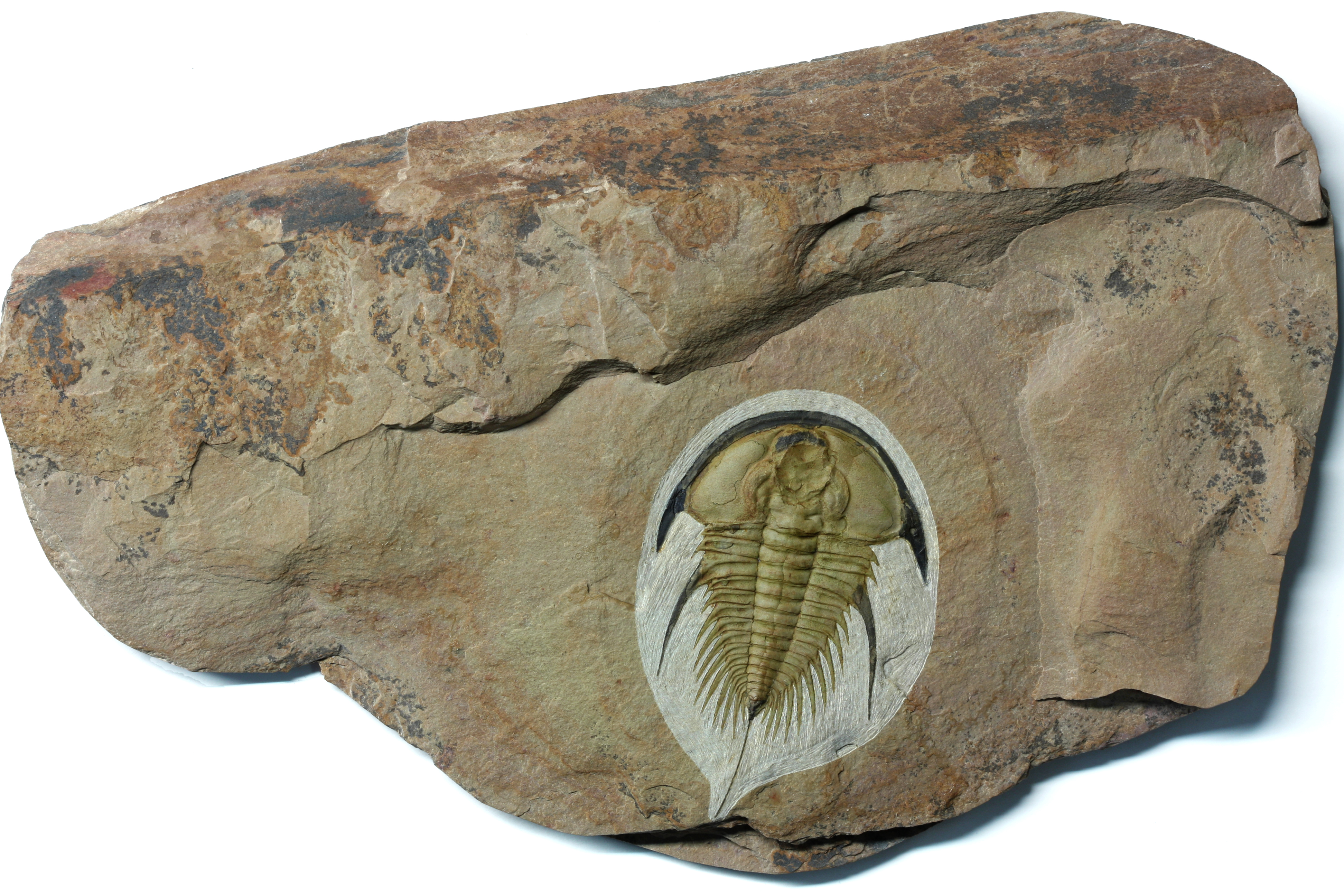
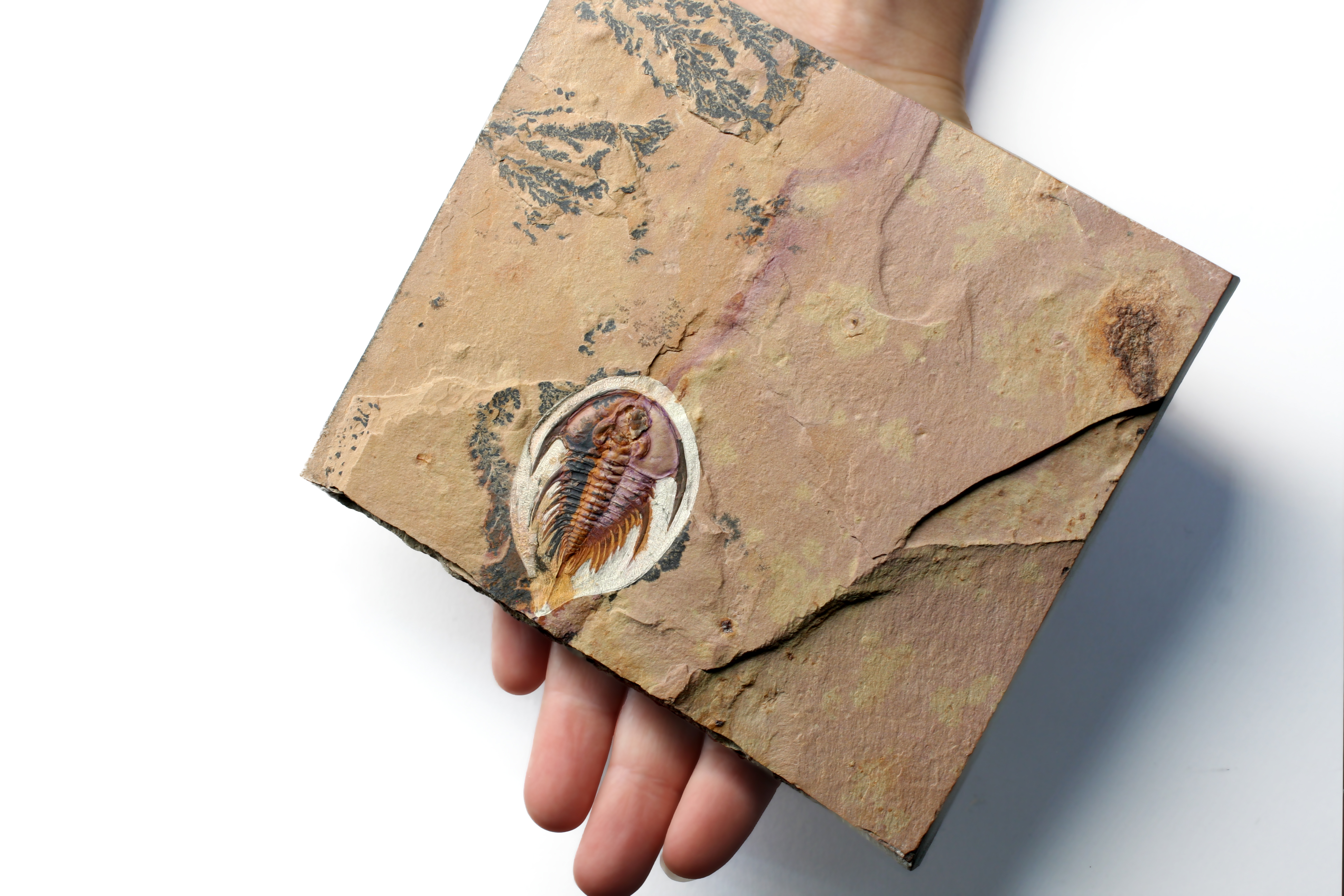
Olenellus gilberti
Lower Cambrian
Olenellus gilberti is a classic American trilobite from the Lower Cambrian of the Great Basin. The species is easily one of the most beautiful examples of trilobite morphology in the fossil record. It often serves as the quintessential representative for all Olenellid trilobites. A quick scan of the internet may lead one to believe the species is relatively common, but I’d challenge anyone to find a reasonable number of truly epic examples.
This species was collected heavily in the late 90’s and early 2000’s. Most of that material consisted of small or imperfect specimens with some standouts. To get a sizable specimen on an attractive block proved quite difficult, hence few seem to be kicking around, at least in public view.
Over the past year and a half we’ve released some specimens from that time period that are likely the best of the best in terms of aesthetics and preparation. Many larger specimens of this species have made spectacular wall displays.
The species itself has a fair amount of variation, with both short and long-spine morphotypes easily recognizable. The classic example of the species is the long-spine type. In the rocks where they occur with other species, O. gilberti tends to dominate with much higher numbers. While they never seem to reach prolific levels, they did seem to be quite successful. Unfortunately for them they were amongst the very last of the Olenellids, quickly wiped out at the end of the Lower Cambrian. It’s arguably the most iconic Lower Cambrian American trilobite. It is generally also the most requested.
Species Overview
Olenellus gilberti belongs to the genus Olenellus in the family Olenellidae (order Redlichiida, suborder Olenellina), representing one of the classic and most widespread trilobite lineages of the late Early Cambrian. It lived during the Dyeran stage (upper Olenellus Zone), approximately 515–510 million years ago, making it a key component of the final phases of the Cambrian explosion’s great diversification of marine arthropods.
Habitat And Environment
Olenellus gilberti inhabited shallow, nearshore marine environments along the western margin of the paleocontinent Laurentia (present-day western United States), particularly in what is now eastern California and Nevada. Fossils are primarily preserved in siltstone and shale layers of the Carrara Formation and equivalent units of the Pioche Formation, which represent low-energy, subtidal to intertidal depositional settings with fine-grained sediments indicative of quiet, protected coastal waters. These habitats were part of a broader epicontinental sea system, with soft, muddy substrates that supported diverse benthic communities during the late Olenellus Zone.
Classification
| Class | Trilobita |
| Order | Redlichiida |
| Suborder | Olenellina |
| Family | Olenellidae |
| Genus | Olenellus |
| Species | O. gilberti |
Ecological Role And Lifestyle
As a typical olenelline trilobite, Olenellus gilberti was a benthic epifaunal organism, living on the surface of the seafloor rather than burrowing deeply into the sediment. It is inferred to have been a mobile, low-level deposit feeder, actively crawling across the substrate to consume organic detritus, microbial films, and fine particulate matter — essentially acting as a seafloor scavenger or detritivore that contributed to nutrient recycling in the ecosystem. Its morphology supports this: a relatively large, semi-circular cephalon with prominent genal spines allowed for efficient movement on soft bottoms, while the multi-segmented thorax and small pygidium suggest a flexible body plan suited for navigating uneven seafloor terrain. Like other trilobites, it underwent periodic molting (ecdysis), and fossil evidence often shows injuries or abnormalities in thoracic segments, possibly from failed molts, encounters with predators, or environmental hazards during this vulnerable phase.
Community Interactions
Olenellus gilberti coexisted with other late Early Cambrian invertebrates in the upper Olenellus Zone, including species of Bristolia, Mesonacis fremonti, Olenellus terminatus, Olenellus fowleri, and occasional Peachella. It formed part of a low- to moderate-diversity but rapidly evolving benthic assemblage that marked the transition toward more complex Early Cambrian ecosystems. Its role as a mobile detritivore likely positioned it as a primary consumer in this food web. The species is especially valuable for biostratigraphy, helping correlate late Dyeran strata across the Great Basin. Overall, O. gilberti exemplifies the adaptive success of olenelline trilobites in oxygenating, nutrient-rich Lower Cambrian seas, where spinose body plans enhanced survival in predator-scarce but physically dynamic coastal zones.