Paranephrolenellus Double – Preserved Antenna & Legs OUT OF STOCK

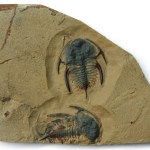
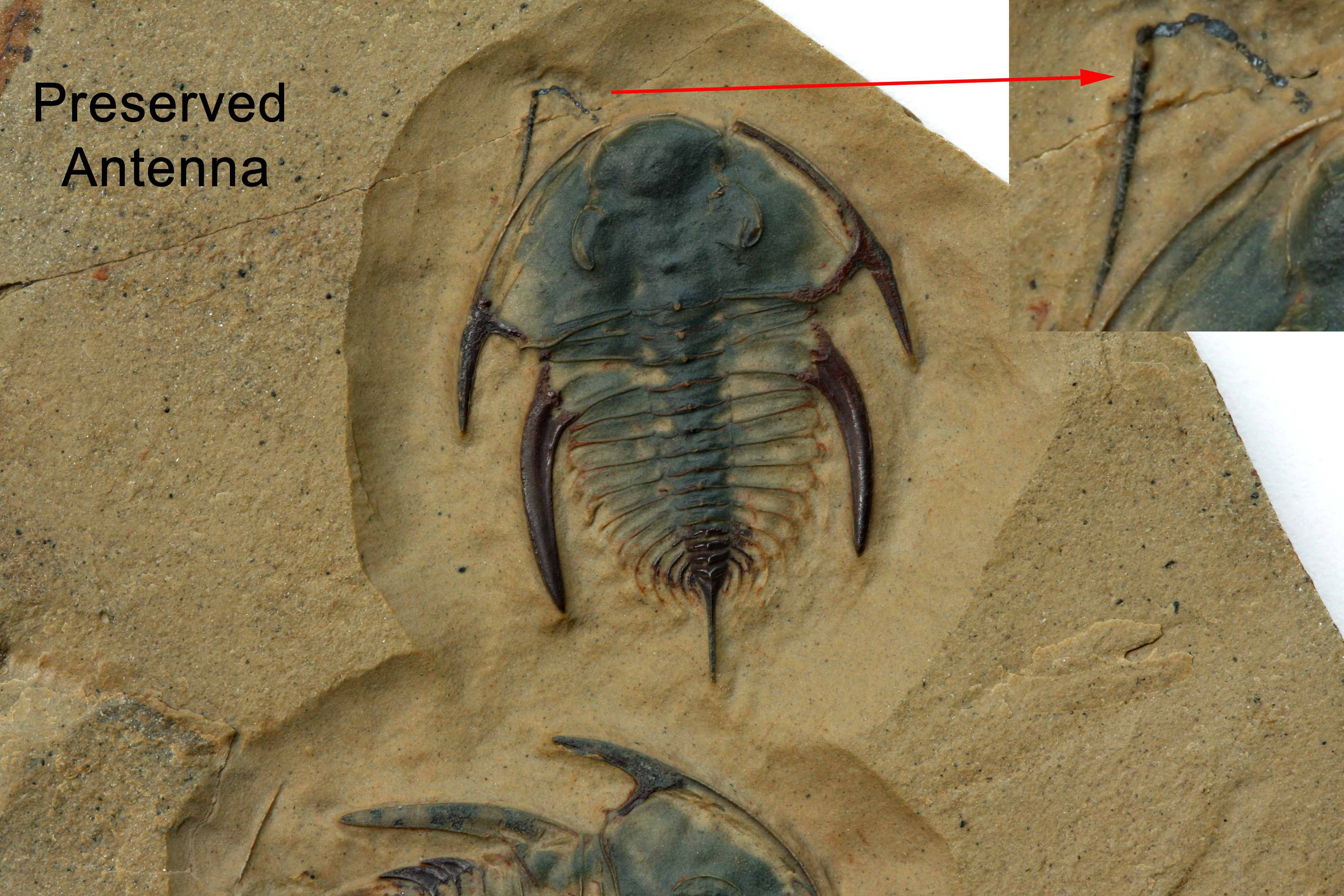
An exceptional Lower Cambrian double specimen of the scarce Paranephrolenellus klondikensis. The preservation on these trilobites is remarkable, showing red iron/hematite mineral replacement of spines, antenna and even delicate leg elements. Paranephrolenellus is a recently discovered genus, not much more than a decade since it was first described. This plate contains one perfect example of the species as well as one nearly complete, situated on the edge of a natural weathering joint. The natural weathering is likely responsible for the visible soft tissues as weathering often causes reactive mineral processes with iron. The main specimen on this plate measures 2.8 cm and is perfect, showing the short but robust spine sets as well as a complete rack of axle spines running the length of the trilobite. A small central spine or node is also present on the glabella between the eyes, a morphological feature not in the species description. Perhaps most notable about this specimen is a beautifully preserved antennae emerging from the left side of the cephalic border. The antenna is preserved in iron.

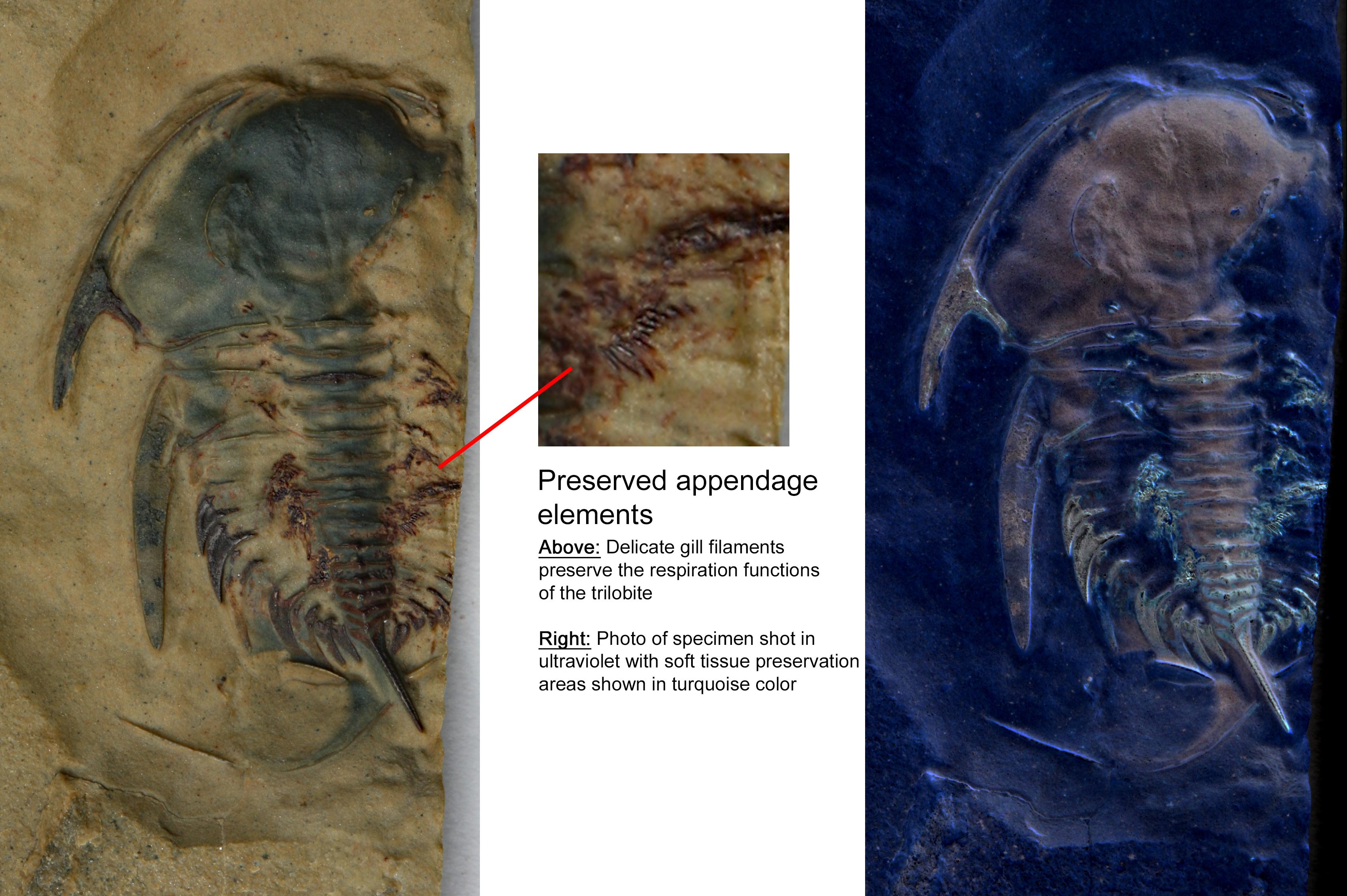
The trilobite on the edge has exceptionally preserved leg elements of both walking appendages as well as swimming/respiratory appendages. A particularly well preserved bundle of delicate gill filaments is readily visible to the eye. These Lower Cambrian trilobites are extremely old, amongst the first of the trilobites. Their soft tissues are remarkably similar to the Triarthrus eatoni morphology from Beecher’s Bed in the Ordovician of New York. However Paranephrolenellus is 70 million years older than Triarthrus.

Incredible piece!

Age: Lower Cambrian

Species Name: Paranephrolenellus klondikensis

Order / Family: Redlichiida / Olenellidae

Locality: Lincoln County, Nevada

Formation: Pioche Shale

SKU: 197 Category:

Description

An exceptional Lower Cambrian double specimen of the scarce Paranephrolenellus klondikensis. The preservation on these trilobites is remarkable, showing red iron/hematite mineral replacement of spines, antenna and even delicate leg elements. Paranephrolenellus is a recently discovered genus, not much more than a decade since it was first described. This plate contains one perfect example of the species as well as one nearly complete, situated on the edge of a natural weathering joint. The natural weathering is likely responsible for the visible soft tissues as weathering often causes reactive mineral processes with iron. The main specimen on this plate measures 2.8 cm and is perfect, showing the short but robust spine sets as well as a complete rack of axle spines running the length of the trilobite. A small central spine or node is also present on the glabella between the eyes, a morphological feature not in the species description. Perhaps most notable about this specimen is a beautifully preserved antennae emerging from the left side of the cephalic border. The antenna is preserved in iron.

The trilobite on the edge has exceptionally preserved leg elements of both walking appendages as well as swimming/respiratory appendages. A particularly well preserved bundle of delicate gill filaments is readily visible to the eye. These Lower Cambrian trilobites are extremely old, amongst the first of the trilobites. Their soft tissues are remarkably similar to the Triarthrus eatoni morphology from Beecher’s Bed in the Ordovician of New York. However Paranephrolenellus is 70 million years older than Triarthrus.

Incredible piece!

Age: Lower Cambrian

Species Name: Paranephrolenellus klondikensis

Order / Family: Redlichiida / Olenellidae

Locality: Lincoln County, Nevada

Formation: Pioche Shale

Additional information

Weight 7 oz
Age

Lower Cambrian

Specimen Dimensions

Length: 2.8 cm

Matrix Dimensions

8 cm x 5.4 cm x 0.6 cm Weight: 7 oz