
Description
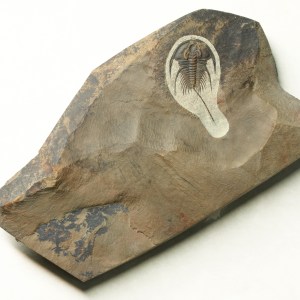
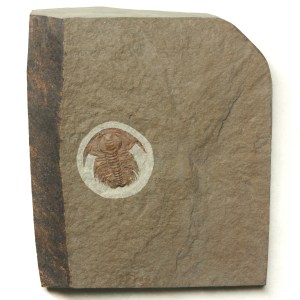
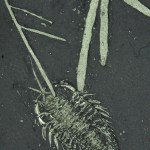
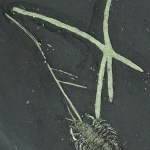
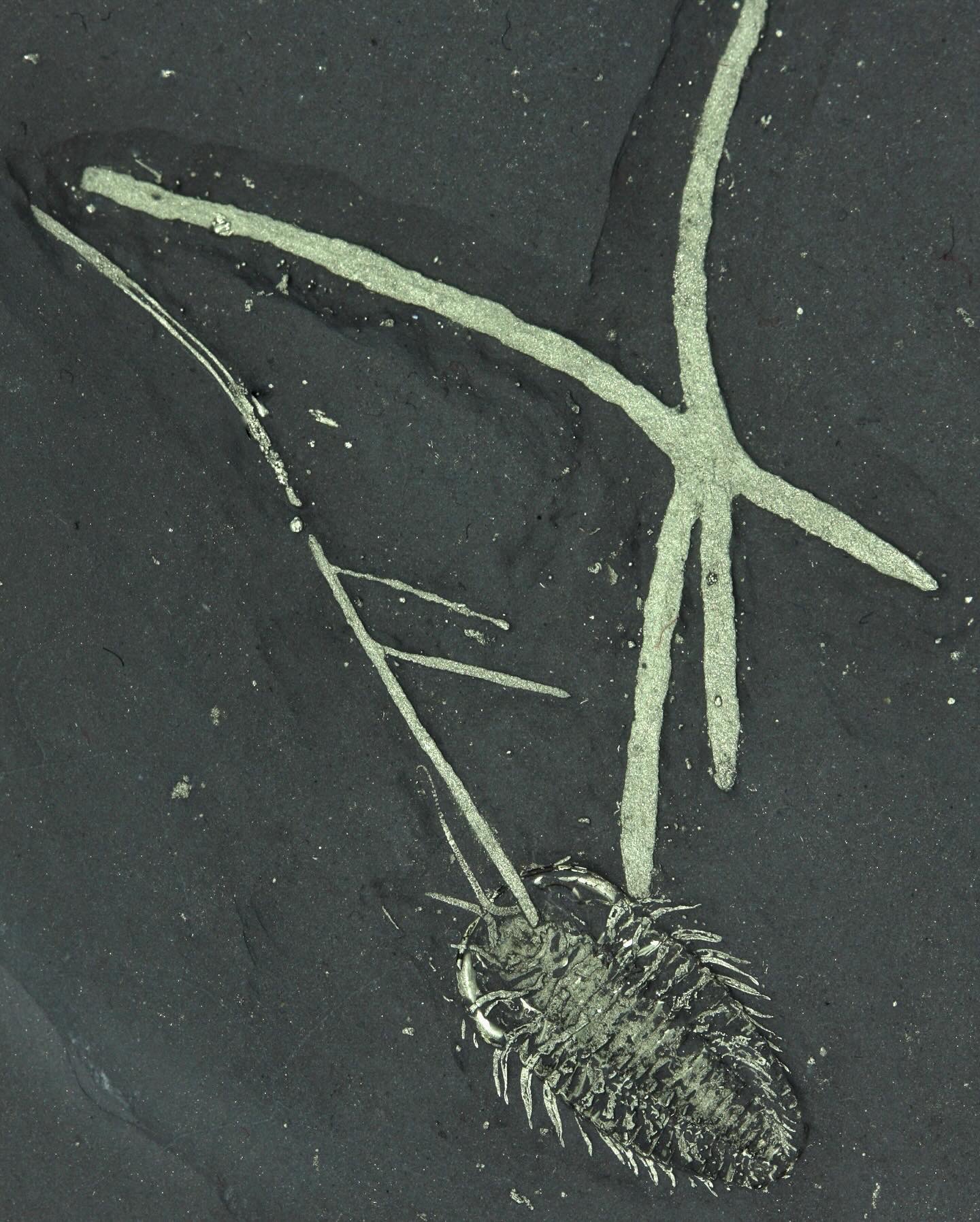
An incredibly preserved upside down Triarthrus trilobite (measures 2.2cm) with preserved legs & antennae sharing the rock with incredibly preserved chondrites trace fossils. These trilobites were buried rapidly in sediment in a deep marine anoxic environment. Their buried carcasses likely attracted the attention of scavengers, which are the source of the branching structures. The chondrites were likely made by a deposit-feeding worms. These animals specialized there scavenging in low oxygen settings. As they dug a vertical shaft into the sediment below, they would then branch out horizontally, probing for the carcasses, sometimes getting lucky, and sometimes, as apparently in this case, narrowly missing. A small prowling branch sits just above the trilobite in this case. In many cases these feeding traces cross trilobites leaving them with few if any soft tissues preserved. While this could be a function of the fossilization process, it’s likely these scavengers were feasting on the trilobite carcasses. This site may be the only place on the planet where these types of feeding trace fossils have direct evidence of interaction with soft tissues in the Paleozoic era. Incredible piece!