


Description
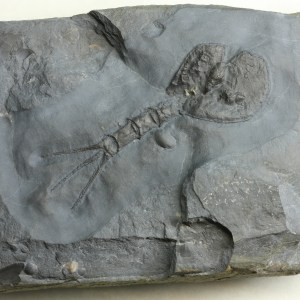
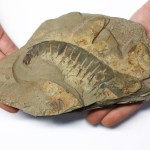
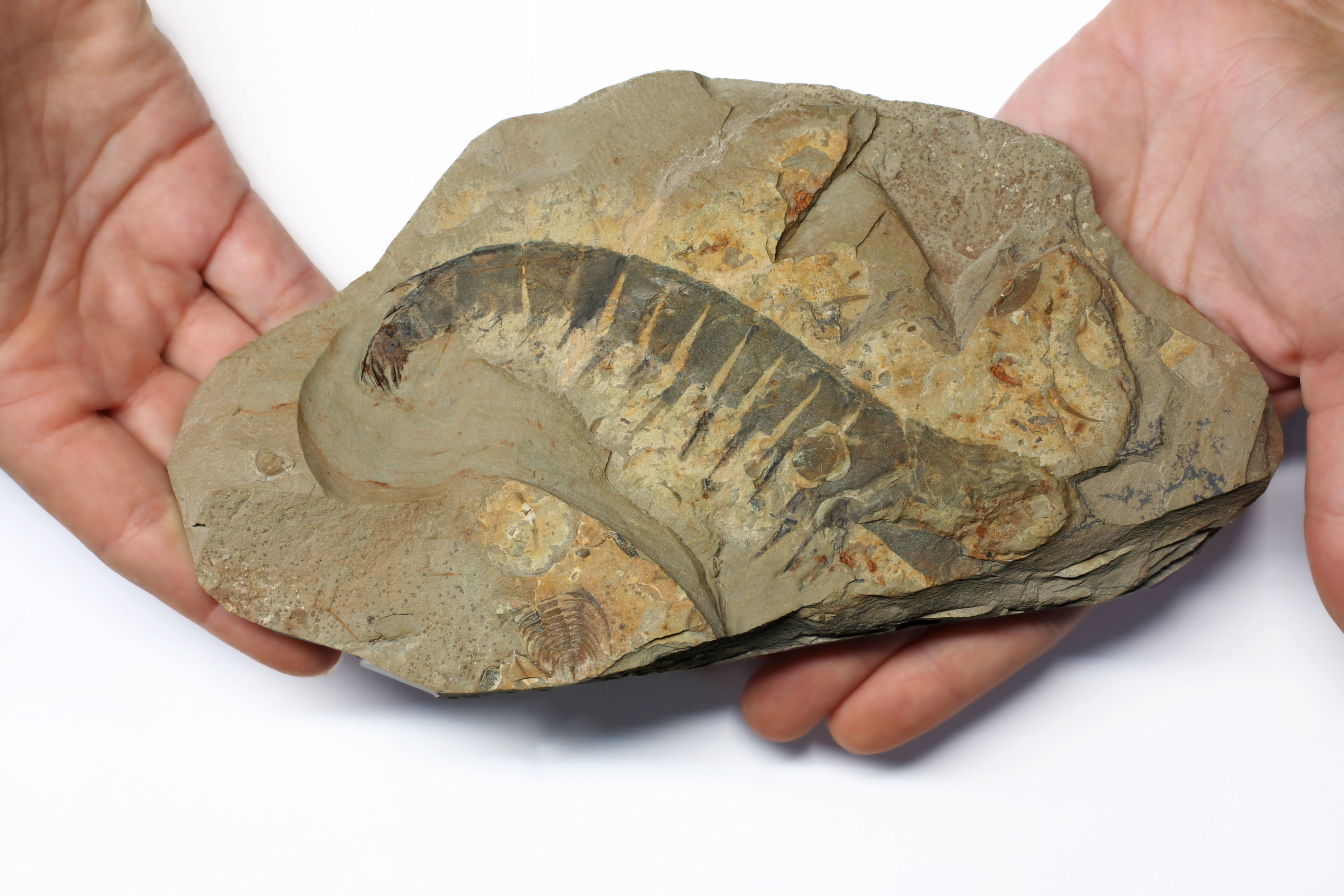
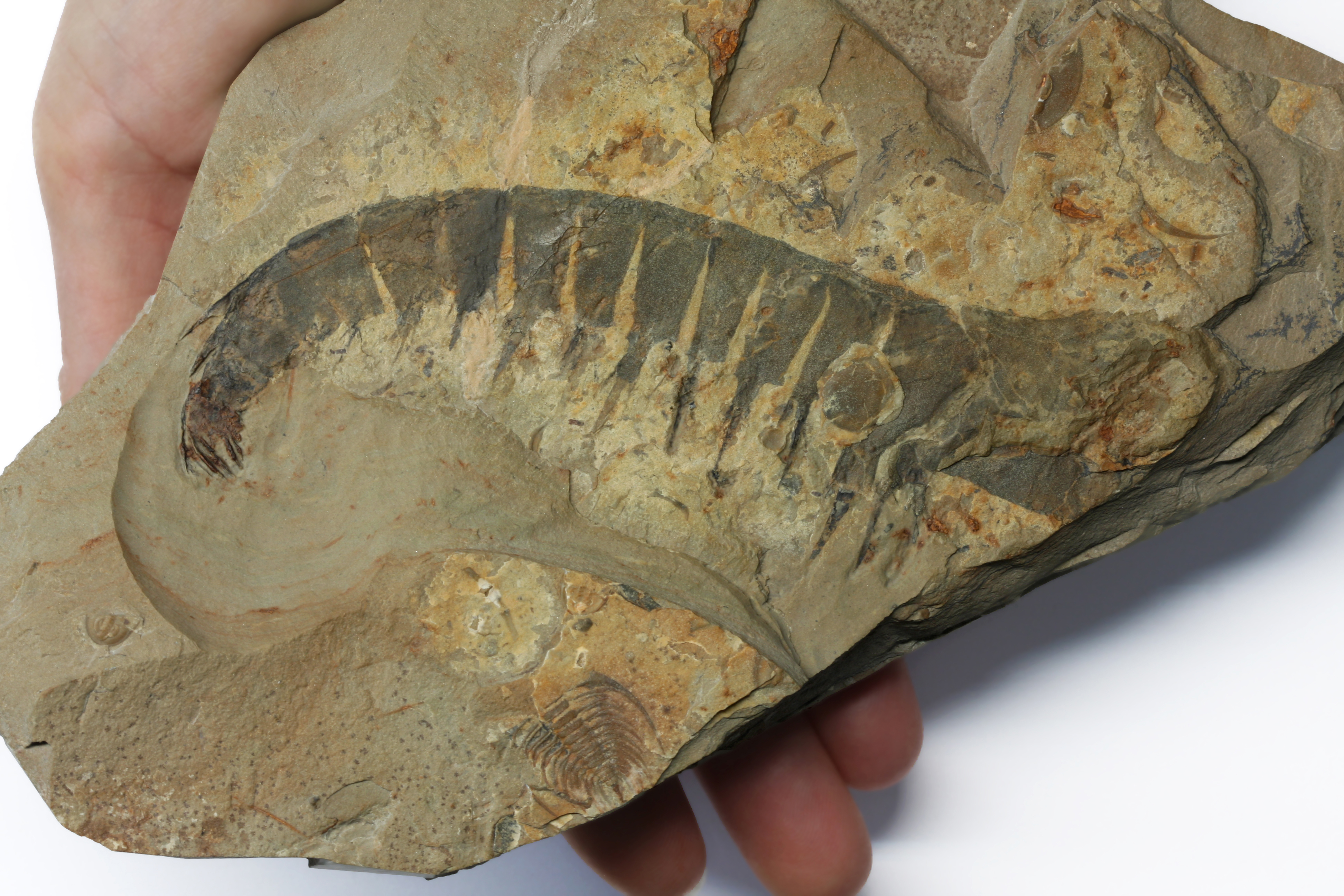
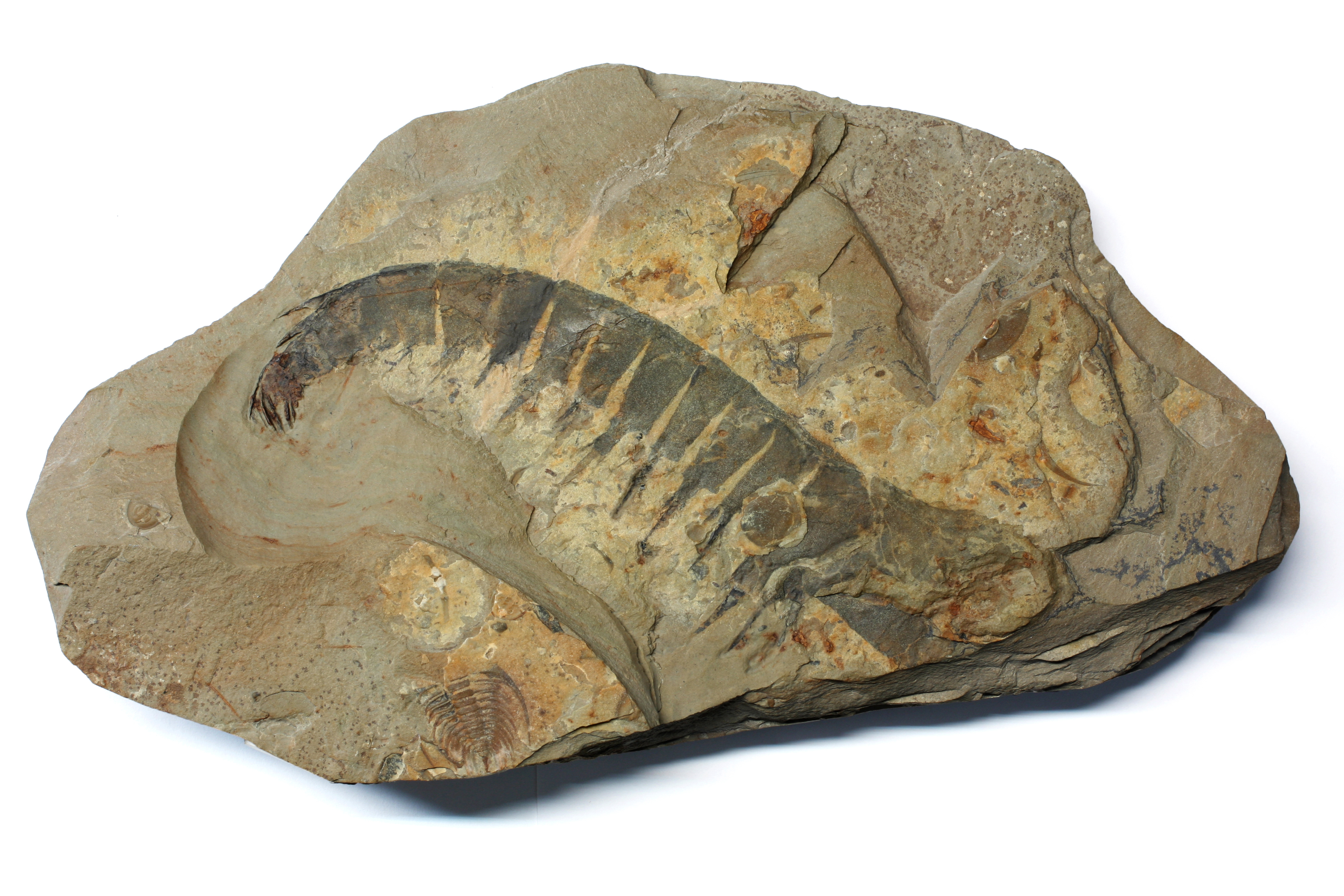
A massive 14 cm (5.5 inches) raptorial appendage of the most iconic predator from the Paleozoic Era. Arguably the finest example of an Anomalocaris grasping appendage from the United States, this complete example comes from the Lower Cambrian rocks of Nevada. It is nearly 10 million years older than its Burgess Shale counterparts, yet is remarkably similar. The appendage features exceptional preservation in thick calcite with slight inflation and exoskeleton surface details. Anomalocaris specimens are generally preserved as thin films or impressions. The appendage is complete from its slightly modified first segment which was attached to the animal to the spine covered distal end, and dorsal facing spines on the last three segments. The tip of the appendage is preserved in iron minerals and inflated. The second appendage (Anomalocaris had two), appears to be tightly fitted beneath, with a portion of its first segment visible. The plate also features a partial Olenellus trilobite, perhaps Olenellus terminatus, as well as several cephalons of olenellid trilobites. A round bulbous trilobite hypostome sits on top of the second arm segment. The specimen was collected in the late 1990’s. There is zero restoration on this piece with the exception of minimal crack stabilization.
Age: Lower Cambrian
Species Name: Anomalocaris sp.
Order / Family: Radiodonta / Anomalocarididae
Locality: Lincoln County, Nevada
Formation: Pioche Shale